
How to Spot Real Matcha in Japan: Colorings, Origins, and Uji Matcha Labels
Supervised by Wakimoto Jokoen Co., Ltd. — Uji tea manufacturer, Kyoto
Share
Hello from ICHIZEN. If you have ever looked at a tin or pouch of matcha and wondered, “Is this real matcha?” or “Does it contain coloring additives?”, you are not alone.
The most reliable place to begin is not the color or the foam. It is the label: the product name, ingredients, origin wording, and processing description.
Start with the ingredient list
If you want pure matcha, first look at the ingredients panel. A simple matcha product will usually list matcha or tea-derived ingredients only.
If you see sugar, flavoring, coloring additives, milk ingredients, or similar additions, it is better to understand the product as a prepared blend. That does not automatically make it “fake.” It may simply be designed for sweet lattes, baking, or easier preparation.
So the useful question is: how do you want to use it? For usucha-style drinking, a plain matcha is usually the better place to start. For desserts or sweet drinks, a blended product may have its own purpose.
Matcha and powdered green tea are not the same category
According to the Japanese tea industry’s labeling standards, matcha is made from tencha: tea leaves grown under shade, dried without rolling, and then finely powdered using a tea mill or similar method.
Powdered green tea is a separate category: tea that has been ground into powder by a grinder or similar equipment. Both can be useful, but their raw material, cultivation, and flavor design are different.
Omatcha no Subete explains that the boundary of matcha can be considered from several angles, including cultivation, picking, manufacture, and grinding, so definitions do not always align perfectly. It also notes that material distinguished as “matcha for processing” at the wholesale stage may appear simply as “matcha” on the final ingredient list. The back label is therefore an important clue, but it cannot tell you every detail about quality or intended use.
| Where to look | What to check | How to read it |
|---|---|---|
| Product name | Matcha, powdered tea, prepared blend | It tells you the intended category |
| Ingredients | Plain matcha, or sugar, flavoring, coloring additives | It helps you choose the right use |
| Origin wording | Uji, Japan-grown, processed in Kyoto | Separate leaf origin from finishing location |
| Color, foam, price | Brightness, whisking result, low price | Useful clues, but not proof on their own |
“Uji matcha” does not mean only tea grown inside Uji City
This is a point that often surprises overseas buyers.
Under the industry’s voluntary rule, Uji tea refers to tea grown in Kyoto, Nara, Shiga, or Mie, then finished and processed by a Kyoto-based business within Kyoto Prefecture. Tea grown within Kyoto Prefecture is prioritized.
In other words, “Uji” is not only a city-name claim. It is also connected to a traditional production and finishing framework in Kyoto. If you would like more context, you may find our note on what Uji matcha origin means helpful.
Do not judge only by color, foam, or price
Good matcha can have a vivid green color, a gentle seaweed-like aroma, and a smooth texture. But lighting, storage, photography, water temperature, and whisking technique can all change how matcha appears.
It is also too simple to say that matcha is poor because it does not foam easily, or that it is not authentic because it is inexpensive. When in doubt, check in this order:
- Does the ingredient list include sugar, flavoring, or coloring additives?
- Is the product labeled as matcha, powdered tea, or a prepared blend?
- Does the origin and finishing explanation sound clear and consistent?
For a broader buying checklist, you can also read our guide on how to spot questionable matcha.
When choosing ICHIZEN, read the label too
ICHIZEN’s Uji matcha is selected and refined by Wakimoto Jokoen, a fourth-generation green-tea wholesaler in Ide-cho, Kyoto, then machine-milled into an ultra-fine, uniform powder.
Before choosing any matcha, it is worth reading the product page carefully. On our Uji Matcha product page, you can check the intended uses and decide whether it suits the way you like to drink matcha.
Buying matcha becomes easier when you do not rush to label things as real or fake. Read the ingredients, understand the wording, and choose the one that fits your cup.
Public references consulted: Kyoto Prefecture Tea Industry Council, “Uji Tea Q&A” and “Types of Tea”; Ministry of Agriculture, Forestry and Fisheries, “Nippon Traditional Food Encyclopedia: Uji Tea”; Japan Tea Central Public Interest Incorporated Association, “Green Tea Labeling Standards: Names and Definitions.”
FAQ
How can I tell if matcha contains coloring additives?
Check the ingredient list and additive labeling on the package. Plain matcha should have a simple label, while sugar, flavoring, or coloring additives indicate a prepared blend for a different use.
What is the difference between powdered green tea and matcha?
Matcha is finely powdered tencha, made from shade-grown tea leaves dried without rolling. Powdered green tea is a separate category made by grinding tea leaves, with different raw materials and flavor design.
Does Uji matcha mean tea grown only in Uji City?
No. Under the industry’s voluntary rule, Uji tea can use tea from Kyoto, Nara, Shiga, or Mie, finished by a Kyoto-based business within Kyoto Prefecture, with Kyoto-grown tea prioritized.
Can I judge matcha quality by bright color alone?
Color is a useful clue, but lighting, storage, photography, and whisking can change its appearance. Check ingredients, product name, origin wording, aroma, and taste together.
References
- Hideki Kuwabara, Zoho Kaitei Uji Matcha Ton'ya Yondaime ga Oshieru Omatcha no Subete (Seibundo Shinkosha, 2019), pp. 013–017.
Column
Related Articles
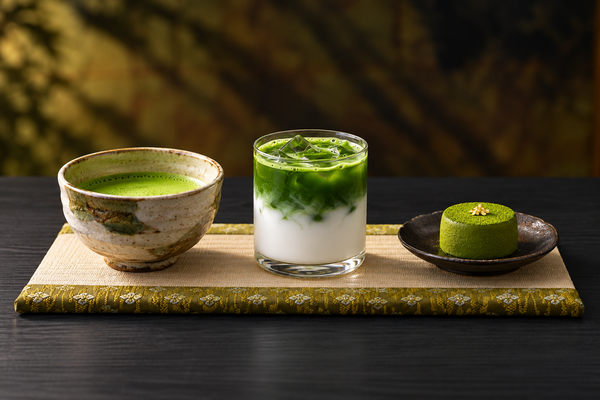
How to Choose Matcha by Use: Drinking, Lattes, and Sweets
Choosing matcha becomes much easier when you begin with how you want to use it. Here is a calm, practical guide to ch...
Read More →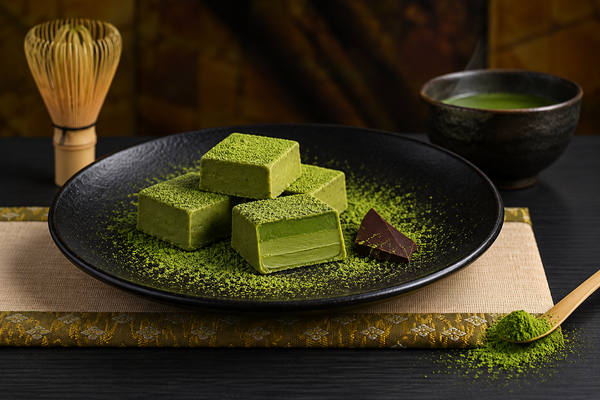
How to Enjoy Matcha Chocolate: Choosing, Pairing, and Making It at Home
A calm guide to matcha chocolate, covering sweetness, cacao, dairy, simple homemade tips, pairings, and how matcha qu...
Read More →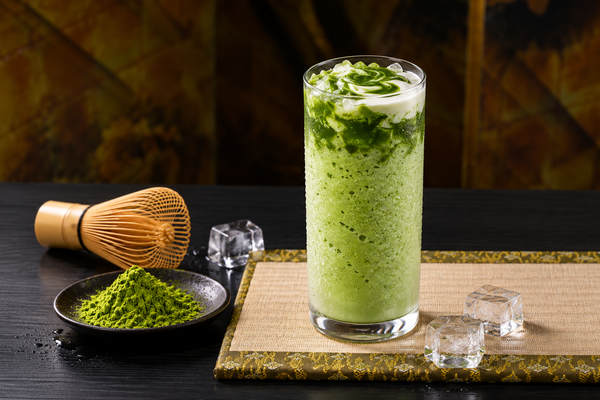
How to Make a Matcha Frappuccino-Style Drink at Home
A calm, practical guide to making a cold blended matcha drink at home, with tips on texture, sweetness, milk, ice, an...
Read More →