

Best Ceremonial Grade Matcha: A Judge's Checklist for Comparing Brands (2026)
Supervised by Wakimoto Jokoen Co., Ltd. — Uji tea manufacturer, Kyoto
Share
Hello from ICHIZEN. If you have searched for “best ceremonial grade matcha,” you may have noticed how quickly the choices begin to blur.
The helpful answer is not to rank brands by the phrase “ceremonial grade” alone. Instead, compare the public product information on the same quiet set of points, and see which matcha fits the way you want to drink it.
First, “ceremonial grade” is not an official Japanese tea type
In Japan, “ceremonial grade” is not listed as an official tea category in the Japanese tea industry’s naming and definition standards. It is better understood as a seller’s expression of intended use, quality impression, or drinking suitability.
That means two brands can use the same phrase in slightly different ways. Please do not assume that “ceremonial” automatically ranks one product above another, or that “culinary” always means unsuitable for drinking.
If the wording feels confusing, our guide to ceremonial vs. culinary matcha can help you set a clearer baseline before comparing products.
The 5 public specs to compare before buying
When you compare matcha, try using only information each seller makes public. Think about your own cup: will you prepare usucha, make a latte, or use it occasionally on weekends?
| Comparison point | What to check | How to read it calmly |
|---|---|---|
| Ingredients | Whether it is matcha, or a blend with powdered tea, sugar, flavoring, or other ingredients | Read the ingredient list before relying on the product name |
| Origin statement | How specific the origin is, such as Kyoto Uji or a broader country-level label | Separate broad origin claims from more specific regional information |
| Intended use | Usucha, koicha, latte, sweets, or general daily use | Choose the explanation that matches how you will actually prepare it |
| Packaging, size, storage | Net weight, light protection, resealing, and storage guidance | Compare price per 1 g and whether you can finish it while fresh |
| Taste and process notes | Umami, bitterness, aroma, texture, and how much the maker explains | Look for specific, measured descriptions rather than broad claims |
Please do not judge quality by color alone
A vivid green color can be a useful clue when choosing matcha. Still, photos are affected by lighting, screen settings, packaging, and storage after opening.
Rather than deciding from color alone, read it together with the ingredients, origin, intended use, storage advice, and taste description. Especially if you are new to matcha, a beautiful photo can be persuasive, so it is worth pausing for one more look at the facts.
Tea judging is helpful context, not a home checklist
Formal tea judging uses trained evaluation of appearance, aroma, taste, and other qualities. It is not something we should simply copy and turn into a household shopping scorecard.
That said, knowing how professionals look at tea can make product descriptions easier to understand. If you would like that background, you may enjoy our article on how tea judges grade matcha.
Use the same checklist when you look at ICHIZEN
ICHIZEN’s Uji matcha is selected and refined by Wakimoto Jokoen, a fourth-generation green-tea wholesaler in Ide-cho, Kyoto. You can compare the published origin, intended use, milling, and packaging details on the same checklist used for any other product.
ICHIZEN’s matcha is not stone-milled. It is machine-milled into an ultra-fine, uniform powder, which helps it whisk smoothly and keeps the flavor profile clear whether you prepare it as usucha or with milk.
If you compare ICHIZEN with another brand, please use the same points: ingredients, origin, intended use, package size, storage guidance, and the seller’s own explanation of taste and process. Public specs are quieter than rankings, but often more useful.
When in doubt, start from how you want to drink it
Do you want a morning bowl of usucha, a slower weekend ritual, or a matcha that also works with milk? Once the use is clear, the right taste profile, package size, and storage style become easier to see.
The “best ceremonial grade matcha” is not the same for every person. It is the one whose public details match your way of enjoying matcha.
Public materials consulted: Kyoto Prefecture Tea Industry Council “Uji Tea Q&A” and “Types of Tea”; Ministry of Agriculture, Forestry and Fisheries “Nippon Traditional Food Encyclopedia: Uji Tea”; Japan Tea Central Public Interest Incorporated Association “Green Tea Labeling Standards: Names and Definitions.”
FAQ
What is different about ceremonial grade matcha?
It is not an official Japanese tea type. It is a seller’s way to express drinking quality or intended use. Check ingredients, origin, use, and taste notes together.
Does a bright green color mean the matcha is good?
Color can be one clue, but photos, lighting, storage, and screen settings can change how it looks. Do not judge by color alone; read the full product details.
Can I trust “best ceremonial grade matcha” rankings online?
They can be a starting point, but each ranking uses different criteria. It is safer to compare the public specs of each product on the same checklist.
How should I store matcha after opening?
Keep it sealed and away from heat, light, moisture, and strong odors. If refrigerated, let it return to room temperature before opening to reduce condensation.
Column
Related Articles
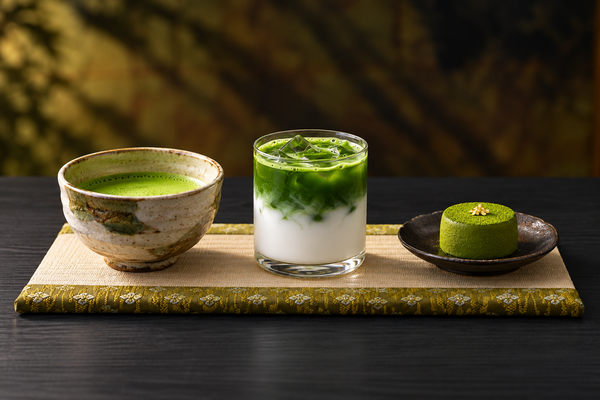
How to Choose Matcha by Use: Drinking, Lattes, and Sweets
Choosing matcha becomes much easier when you begin with how you want to use it. Here is a calm, practical guide to ch...
Read More →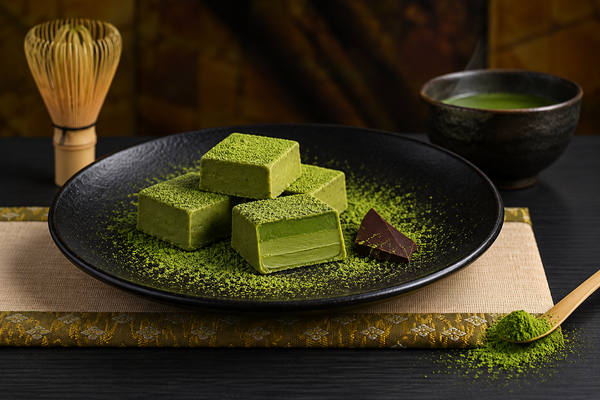
How to Enjoy Matcha Chocolate: Choosing, Pairing, and Making It at Home
A calm guide to matcha chocolate, covering sweetness, cacao, dairy, simple homemade tips, pairings, and how matcha qu...
Read More →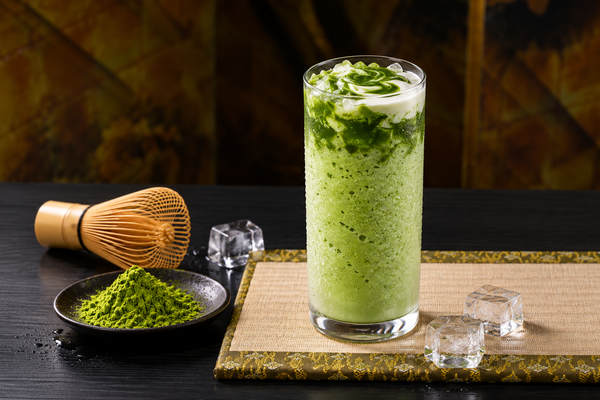
How to Make a Matcha Frappuccino-Style Drink at Home
A calm, practical guide to making a cold blended matcha drink at home, with tips on texture, sweetness, milk, ice, an...
Read More →