

What Is Single-Origin Matcha? How It Differs from Blended Matcha
Supervised by Wakimoto Jokoen Co., Ltd. — Uji tea manufacturer, Kyoto
Share
Hello from ICHIZEN. When you see the words “single-origin matcha,” it can sound naturally more special, can’t it?
The helpful answer is simple: single-origin is not an official Japanese tea grade. It is a descriptive term, so the important question is what is actually single — the region, farm, cultivar, harvest period, or lot.
What does “single” mean in single-origin matcha?
Single-origin matcha is not a legal tea category or public grade name in Japan. Sellers use the phrase to explain the scope of the tea, and that scope can differ from product to product.
For example, “single region,” “single farm,” “single cultivar,” and “single lot” are not the same thing. Are you looking for a clear sense of place, a specific cultivar, or the character of one particular production lot?
A public activity report by the Japan Tea Central Association describes a movement toward finishing some teas without blending, in contrast to the usual practice of blending, or gogumi. That does not mean single-origin is automatically better. It simply gives you another way to enjoy matcha.
The real difference: individuality and consistency
Tea wholesalers combine teas with different strengths through gogumi. The book presents mitsu-awase, balancing aroma, taste, and color, as the foundation. It also describes a fourth consideration, price. Blending is therefore a way to design a target flavor and price, not a way to conceal quality.
Single matcha can make the character of a field, cultivar, or lot easier to notice. Even the same producer and field do not necessarily yield identical quality every year, so harvest variation becomes part of the experience. A blend can adjust its components, including by season, to reproduce an intended profile more consistently.
| Point | Single | Blend |
|---|---|---|
| Flavor direction | Shows the character of a field, cultivar, or lot more clearly | Allows the maker to design a balanced flavor |
| Variation | May change more by harvest year or lot | Can be made for steadier consistency |
| Best for | Comparing differences | Enjoying a familiar taste regularly |
If you are unsure, ask yourself: do I want to explore differences today, or do I want a dependable everyday bowl?
How to read the label before you choose
Please do not assume that “Japanese” or “Uji” automatically means single farm or single cultivar. It is better to read what the seller actually explains.
- Check whether the ingredient name is appropriate for matcha, such as green tea tencha.
- Look at how the raw material origin is shown.
- See whether the seller explains region, farm, cultivar, or lot.
- Confirm what the word “single” refers to in that product.
If you would like a broader buying framework, our matcha choosing checklist may help. Especially when you are new to matcha, it is easier to choose by reading both the usage and the flavor description.
The appeal of matcha from one field
Matcha whose scope is clearly described as one field or one lot can be useful for comparing differences between harvests and places. The word “single” alone does not define that scope, so the seller's explanation remains essential.
Blending has a different purpose. The book describes keeping tea from previous years as one way to adjust annual variation and preserve a familiar quality. Single and blended matcha serve different aims; neither is inherently superior.
At the same time, we do not describe ICHIZEN’s matcha as single-farm. ICHIZEN’s Kyoto Uji matcha is selected and refined by Wakimoto Jokoen, then machine-milled into an ultra-fine, uniform powder. If you would like to understand the origin more deeply, you may also enjoy our article on Uji matcha.
Which one is right for you?
If you want to sit with one bowl and notice its individual expression, a clearly explained single matcha can be a lovely choice. It is also enjoyable for side-by-side tastings.
If you want a steady tea for daily bowls, lattes, or sweets, a well-made blend can be just as reassuring. When considering a tea such as ICHIZEN Uji Matcha, read the taste and usage notes and see whether they match the way you like to drink matcha.
The main point is not to decide that single is higher and blended is lower. Once you understand what the words mean, it becomes much easier to find a bowl that feels right for you.
Public materials referenced: Japan Tea Central Association “2018 Japanese Tea Ambassador Activity Report,” Consumer Affairs Agency “Q&A on Ingredient Origin Labeling,” Japan Tea Central Association “Green Tea Labeling Standards: Names and Definitions.”
FAQ
Is single-origin matcha higher quality than blended matcha?
Not necessarily. Single matcha makes individuality easier to compare, while blending can help create a stable flavor. It is best to choose by use and preference.
If a matcha says “Uji matcha,” does that mean it is single-farm?
No. “Uji matcha” relates to origin, but it does not by itself mean single-farm. Check the product description for farm, cultivar, and lot details.
Is single-cultivar matcha the same as single-origin matcha?
Not always. Single-cultivar means one cultivar, while single-origin may refer to region, farm, lot, or another defined scope depending on the seller.
Should beginners choose single matcha or blended matcha?
Start with your purpose. If you want to compare differences, single matcha can be fun. If you want a steady everyday taste, a blend may be easier to choose.
References
- Hideki Kuwabara, Zoho Kaitei Uji Matcha Ton'ya Yondaime ga Oshieru Omatcha no Subete (Seibundo Shinkosha, 2019), pp. 056, 100–104, 122.
Column
Related Articles
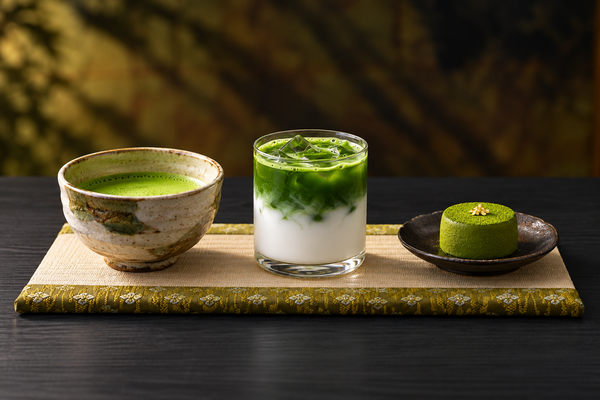
How to Choose Matcha by Use: Drinking, Lattes, and Sweets
Choosing matcha becomes much easier when you begin with how you want to use it. Here is a calm, practical guide to ch...
Read More →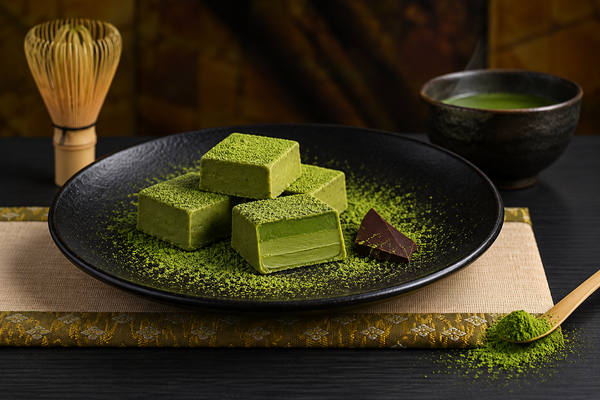
How to Enjoy Matcha Chocolate: Choosing, Pairing, and Making It at Home
A calm guide to matcha chocolate, covering sweetness, cacao, dairy, simple homemade tips, pairings, and how matcha qu...
Read More →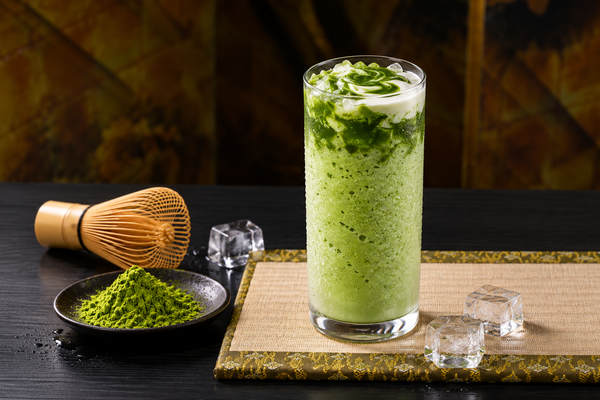
How to Make a Matcha Frappuccino-Style Drink at Home
A calm, practical guide to making a cold blended matcha drink at home, with tips on texture, sweetness, milk, ice, an...
Read More →