

How Matcha Is Made: From Tencha to an Ultra-Fine Powder
Supervised by Wakimoto Jokoen Co., Ltd. — Uji tea manufacturer, Kyoto
Share
Is matcha simply green tea ground into powder?
No: matcha begins with tencha, not ordinary sencha. Here is the path from shading and steaming to finishing and milling.
Why is matcha made from tencha, not sencha?
According to the Japanese green tea industry definition, tencha is made from tea leaves that are shaded for about two to three weeks before harvest, then steamed and dried without rolling, often in a tencha drying furnace. Matcha is tencha that has been ground into a fine powder using a stone mill or a method with comparable function.
The key point is “without rolling.” Sencha is generally steamed, rolled while being dried, and then brewed by infusion in hot water. Tencha is dried without rolling, leaving the leaf in a flatter form that is intended to become powder later.
If you would like a little more background, our short glossary entry on tencha is a helpful place to continue.
What does shading do to the taste?
For tencha, tea plants are covered before harvest to reduce the amount of light reaching the leaves. The book gives a shading rate of about 95–98%. This tends to slow the conversion of theanine into catechins, which is one reason shaded tea often has more umami and gentler bitterness.
Traditional honzu covering uses reed screens and rice straw, while kanreisha uses synthetic fabric. Covering began as frost protection and later developed into a cultivation technique for shaping color and taste. These describe tencha cultivation, not specifications for ICHIZEN's raw tea.
Treat this as a tendency: leaf condition, refining, storage, and preparation also change the final taste.
Sencha and tencha, compared by process
| Point | Sencha | Tencha |
|---|---|---|
| Cultivation | Often grown without shading | Shaded for about two to three weeks before harvest |
| Heat treatment | Steamed | Steamed |
| Drying | Rolled while dried | Dried without rolling |
| How it is drunk | Infused in hot water | Dispersed as a fine powder in water or milk |
Seen this way, matcha is not simply “sencha made into powder.” It is designed differently from the field onward. For a wider comparison, you may also enjoy our guide to matcha vs green tea.
What happens after tencha is dried?
In traditional Uji tea gardens, naturally trained branches have been hand-picked by bending and snapping off the tender shoot, a method called ori-zumi. The steamed leaves are dried without rolling in a tencha furnace whose lower level reaches 180–200°C or more. This is a general account of the traditional process.
Before dried tencha becomes matcha, it is cut, sifted, winnowed, dried again, and sorted. This finishing process removes stems and leaf veins so the powder can have a smoother texture, clearer aroma, and more even appearance.
Then the refined tencha is milled into a fine powder. Traditionally, finished tencha is ground with a stone mill, but the definition also includes grinding methods with functions comparable to a stone mill.
ICHIZEN’s matcha is made from Kyoto Uji tea selected and refined by Wakimoto Jokoen, a fourth-generation green-tea wholesaler in Ide-cho, Kyoto. It is not stone-milled; it is machine-milled into an ultra-fine, uniform powder.
Matcha does not truly dissolve—it disperses
Matcha is not completely soluble; fine tea-leaf particles remain dispersed in the liquid. Some settling is natural, so stir or swirl the drink gently before drinking.
Knowing the process makes choosing matcha easier
Price and taste reflect cultivation, tencha production, refining, milling, and storage. For usucha, consider aroma and smoothness; for lattes and sweets, consider color and how flavor carries through milk or sugar. Our article on why matcha can be expensive explains it calmly.
In short: matcha begins with tencha
Matcha is not sencha that has simply been powdered. It begins with shaded tea leaves that are steamed, dried without rolling, refined, and milled into a fine powder.
Knowing the process makes the sources of its flavor easier to understand.
Public source consulted: Japan Tea Central Association, “Green Tea Labeling Standards: Names and Definitions,” among others.
FAQ
Is matcha made from sencha?
No. Matcha is made from tencha: tea leaves that are shaded before harvest, steamed, and dried without rolling. Sencha is usually rolled while dried and brewed by infusion.
Does matcha completely dissolve in water?
No. Matcha does not fully dissolve; fine tea-leaf particles are dispersed in the liquid. Some settling over time is natural, so stir or swirl before drinking.
Is only stone-milled tea called matcha?
Traditionally, finished tencha is ground with a stone mill, but the definition also includes comparable grinding methods. ICHIZEN uses machine milling for a fine powder.
Is shaded matcha always low in bitterness?
Shading tends to support umami and soften bitterness by slowing changes from theanine to catechins. The final taste still depends on the tea, refining, storage, and preparation.
References
- Hideki Kuwabara, Zoho Kaitei Uji Matcha Ton'ya Yondaime ga Oshieru Omatcha no Subete (Seibundo Shinkosha, 2019), pp. 034–041, 044–046.
Column
Related Articles
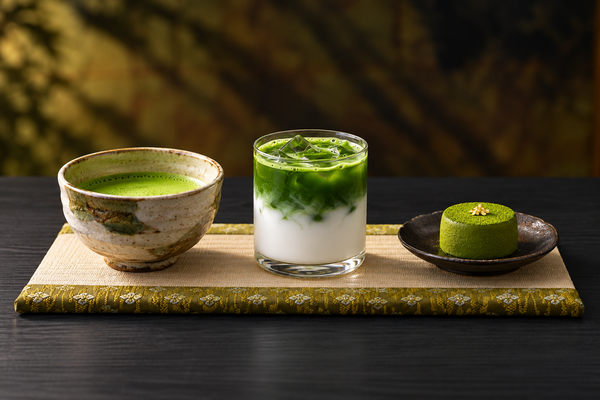
How to Choose Matcha by Use: Drinking, Lattes, and Sweets
Choosing matcha becomes much easier when you begin with how you want to use it. Here is a calm, practical guide to ch...
Read More →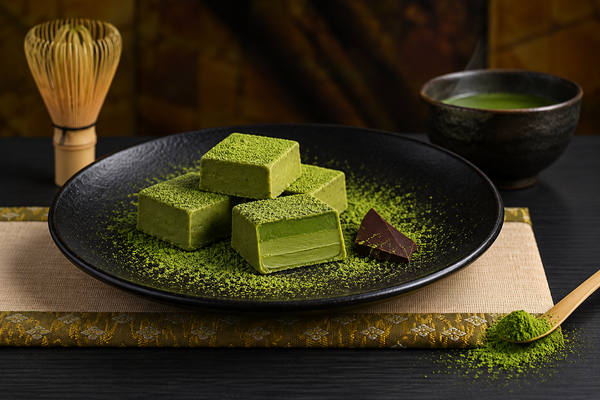
How to Enjoy Matcha Chocolate: Choosing, Pairing, and Making It at Home
A calm guide to matcha chocolate, covering sweetness, cacao, dairy, simple homemade tips, pairings, and how matcha qu...
Read More →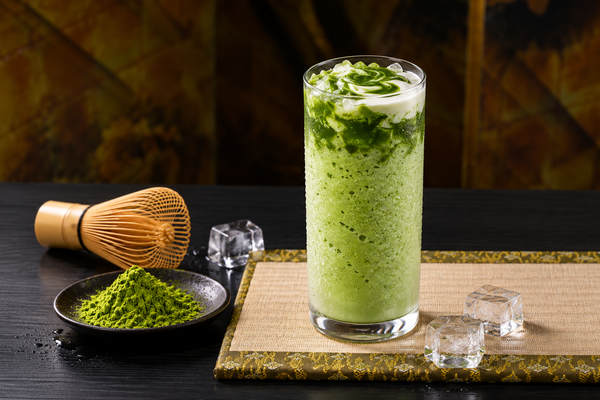
How to Make a Matcha Frappuccino-Style Drink at Home
A calm, practical guide to making a cold blended matcha drink at home, with tips on texture, sweetness, milk, ice, an...
Read More →