Hello from ICHIZEN. If you have just finished whisking matcha, you may wonder how to clean your chasen without damaging it.
A bamboo matcha whisk is delicate, but caring for it is simple. Rinse it soon after use, avoid strong heat and soap, and let it dry fully before storing it.
Why does a matcha whisk need gentle care?
A chasen helps loosen matcha into hot water and create a soft, fine texture. Its thin bamboo tines are flexible enough to move lightly across the bowl.
Because bamboo can absorb moisture and scent, it should not be left wet for long. Good drying helps prevent discoloration, odor, and damage to the tips.
What should you do before using it?
Soften the tips first
Before using a new or very dry whisk, pour warm water into your bowl and soak the tips for about 30 seconds. This makes the bamboo a little more flexible and helps reduce breakage.
You may also notice that the whisk feels smoother against the bowl. It is a small step, but it makes the whole preparation feel calmer.
How to clean a matcha whisk
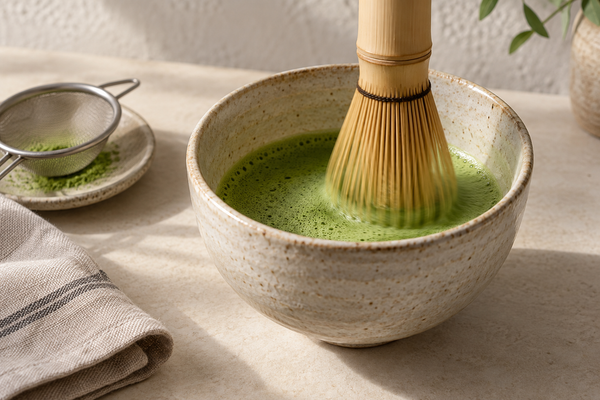
Clean the whisk before the matcha dries. Add clean water or lukewarm water to the bowl, then move the whisk as if you were whisking matcha. This helps release powder from between the tines.
After that, rinse the tips gently under running water. Check the base of the tines, but avoid scrubbing hard.
Avoid dish soap in everyday care
Do not use a dishwasher or boiling water
Do not leave the whisk soaking for a long time
Soap fragrance can remain in bamboo and may affect the aroma of your next bowl of matcha. If the whisk looks stained, try patient rinsing with lukewarm water first.
Drying and storing it well
After rinsing, shake off excess water and leave the whisk in a well-ventilated place to air dry. A whisk holder is useful because it supports the shape of the tines while the bamboo dries.
If you do not have a holder, place the whisk on a clean cloth and let it dry completely. Avoid putting it back into a plastic tube or case while it is still damp.
When should you replace a chasen?
If many tips are broken, the tines have spread widely, or your matcha becomes harder to whisk smoothly, it may be time to replace it.
The right timing depends on how often you use it. If you are preparing your first tools, our matcha starter kit guide may help you choose what you need.
A small habit for a better bowl
Chasen care does not need to feel formal or difficult. Soften it before use, rinse it soon after whisking, and let it dry completely.
When your tools are cared for, preparing matcha becomes quieter and more enjoyable. We hope your next bowl feels easy and pleasant.
FAQ
Can I wash a matcha whisk with dish soap?
It is best to wash it with water or lukewarm water. Bamboo absorbs scent easily, and soap fragrance may remain and affect the flavor of your next bowl of matcha.
Can I use a matcha whisk if I see mold on it?
If visible mold appears, it is safer to replace the whisk. To help prevent mold, shake off water after use and let the whisk dry completely in a ventilated place.
How often should I replace a matcha whisk?
There is no fixed schedule. Consider replacing it when many tips are broken or spread out, or when matcha becomes harder to whisk smoothly.
Can I make matcha without a bamboo whisk?
You can mix matcha with a shaker or other tool, but a chasen is designed to loosen the powder into water and create a smoother texture. It is useful for home preparation.