Hello from ICHIZEN. If you have ever made a matcha latte at home and wondered why it tasted thin, bitter, or a little clumpy, you are not alone.
The simplest answer is this: dissolve the matcha first with a small amount of warm water, then add the milk. This works for both hot and iced matcha lattes.
What do you need for one cup?
For one serving, start with 2 g of matcha, 30 ml of warm water, and 150–180 ml of milk. If you prefer a sweeter latte, add 1–2 teaspoons of sugar or syrup.
A matcha with clear aroma and enough depth will hold its shape better with milk. You can browse ICHIZEN’s Kyoto Uji matcha, including matcha from Wakimoto Jokoen, in our collection.
Matcha: 2 g
Water: 30 ml, around 70–80°C
Milk: 150–180 ml
Sweetener: 1–2 teaspoons, to taste
How to make a hot matcha latte
1. Sift the matcha
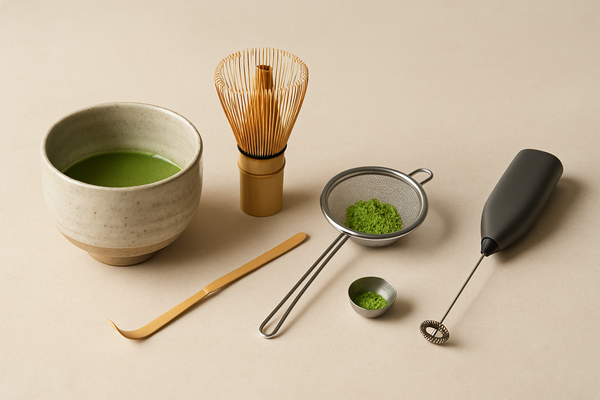
Sifting helps prevent clumps and gives the latte a smoother texture. It is a small step, but you will notice it in the cup.
2. Whisk with a little warm water
Add about 30 ml of water at 70–80°C and whisk with a chasen or a small whisk. At first, focus on loosening the powder from the bottom of the bowl.
3. Add warm milk
Warm the milk gently, without boiling it. Around 60°C is a good guide. Pour it into the matcha and stir lightly to finish.
How to make an iced matcha latte
For an iced latte, do not add matcha powder directly to cold milk. First, whisk 2 g of matcha with a small amount of warm water.
Fill a glass with ice, pour in cold milk, then gently add the matcha on top. It will look beautifully layered; simply stir before drinking for an even taste.
Common mistakes to avoid
If your latte tastes too bitter, the matcha amount may be too high, or the water may be too hot. Start with 2 g of matcha and water around 70–80°C.
If it tastes too light, reduce the milk slightly or increase the matcha to about 2.5 g. Do you like a lighter, refreshing latte, or something deeper and more pronounced?
Choosing milk and sweetness
Sugar dissolves most easily in the warm matcha mixture. For iced lattes, syrup blends more smoothly and is less likely to settle at the bottom.
Dairy milk gives a rounded taste, oat milk brings gentle nuttiness, and soy milk has a grain-like character. If you want to notice the matcha more clearly, begin with a neutral milk and adjust from there.
A small storage note
Matcha is sensitive to moisture, light, and surrounding aromas. After opening, seal it well and store it in a cool, dark place or the refrigerator. If refrigerated, let it sit briefly at room temperature before opening to reduce condensation.
Once you know the basic ratio, a matcha latte becomes easy to adjust. Start with one simple cup, then gently move the strength and sweetness toward what feels right for you.
FAQ
What kind of matcha is best for a matcha latte?
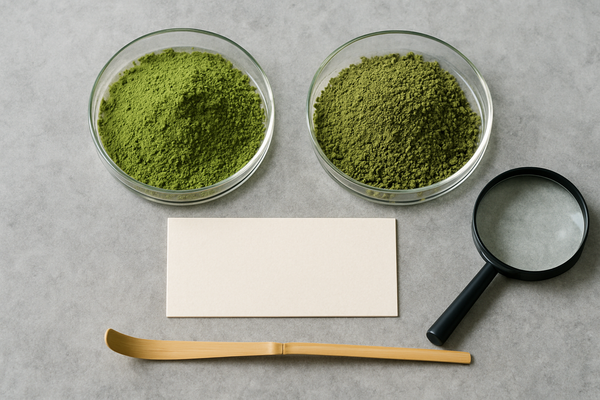
For milk-based drinks, choose matcha with clear aroma, pleasant umami, and moderate astringency. Rather than choosing by color alone, look for depth of taste and a clean finish.
Why does my matcha latte become clumpy?
Clumps often happen when matcha powder is added directly to cold milk or used without sifting. Whisking it first with a small amount of warm water gives a smoother result.
Can I make a matcha latte without dairy milk?
Yes. Oat milk gives a lightly nutty flavor, while soy milk has a gentle grain-like note. Each milk changes the sweetness and aroma, so trying small amounts is helpful.
When should I add sugar to a matcha latte?
For a hot latte, add sugar just after whisking matcha with warm water so it dissolves easily. For an iced latte, syrup blends more smoothly than granulated sugar.