Hello from ICHIZEN. If you have ever wondered whether a more expensive matcha is always better, or what “ceremonial” and “culinary” really mean, you are not alone.
The simple answer is this: matcha grades are useful guides, but they should not be the only thing you look at. Color, aroma, taste, texture, freshness, and your intended use all matter when choosing a matcha that feels right for you.
Matcha grade names are not a universal legal standard
Terms like “ceremonial grade” and “culinary grade” are common, especially outside Japan, but they are not globally standardized legal categories. One brand’s “ceremonial” may not be exactly the same as another’s.
That is why it helps to read beyond the label. Look for origin, producer information, how the tea is intended to be used, and how the flavor is described. ICHIZEN focuses on single-origin Uji matcha from Wakimoto Jokoen in Kyoto, and we try to guide you by use and taste rather than by impressive-sounding words alone.
Four practical clues for reading matcha quality
1. Color: a bright green is a helpful sign
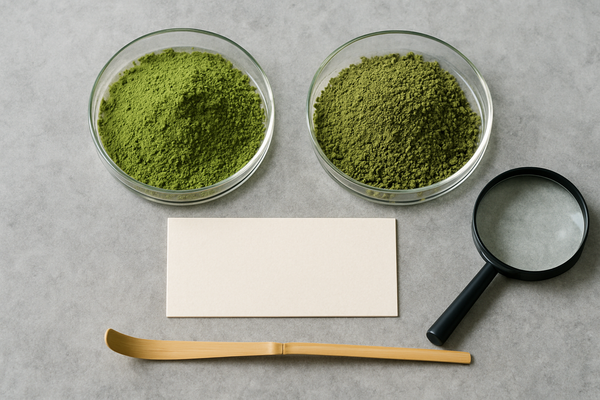
High-quality matcha often has a vivid, fresh green appearance. Still, color can be affected by lighting, photography, age, and storage. It is a clue, not a complete answer.
2. Aroma: look for freshness and gentle sweetness
Good matcha may have a fresh leafy aroma, a soft umami note, and a quiet sweetness even before you add water. Older matcha can smell flat, muted, or less lively.
3. Taste: balance matters more than “no bitterness”
Matcha naturally has some astringency and bitterness. What matters is whether those notes are balanced by umami, sweetness, and a smooth finish.
For usucha, or thin tea, choose a matcha with a gentle aftertaste and minimal harshness. For lattes or sweets, you may want a matcha with enough aroma and structure to remain present with milk or sugar.
4. Texture: fine powder usually feels smoother
Matcha is made by finely milling tencha. A finer powder often creates a smoother mouthfeel, but moisture can cause clumping and make it harder to whisk well.
Choose by use, not only by grade
A very delicate matcha can be beautiful as thin tea, but some of its nuance may be hidden in milk. On the other hand, a matcha made for lattes or baking may taste too strong or astringent when prepared simply with water.
For thin tea: focus on umami, aroma, and a smooth finish
For a richer preparation: look for depth without harsh bitterness
For matcha latte: choose clear aroma and good color
For sweets or cooking: choose flavor that holds up to heat and sweetness
If you are unsure, a balanced middle style is often a good place to begin. You can compare ICHIZEN’s matcha by intended use in our product collection.
What to check before you buy
Matcha is delicate. Freshness and storage can affect the cup almost as much as the grade itself.
After opening, keep matcha tightly sealed and away from air, light, moisture, and heat. If you drink it regularly, choosing an amount you can finish in about one to two months helps preserve its aroma.
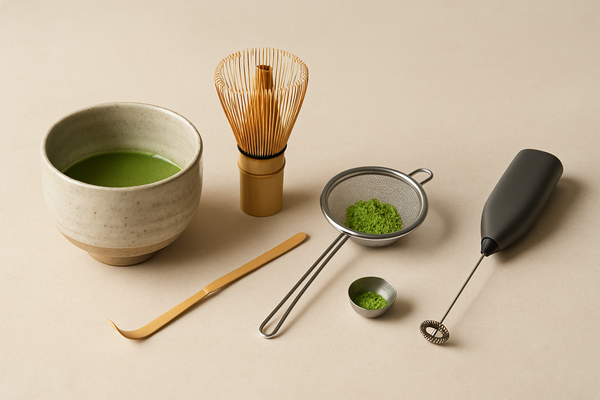
For your first bowl, try not to make it too strong. Around 2 g of matcha with a small amount of water at about 70–80°C can help the flavor open without making bitterness the main impression.
In short: the best grade is the one that fits your cup
Matcha grades are helpful, but they do not tell the whole story. Your preferred way of drinking matters.
Look at color, aroma, texture, flavor balance, use case, and storage. When you compare matcha gently through your own daily routine, the right choice becomes much clearer.
FAQ
Does a darker green color always mean a higher matcha grade?
Color is an important clue, but it is not enough on its own. Lighting, photography, and storage can change how matcha appears. Check aroma, taste, texture, and intended use as well.
Can I whisk culinary matcha and drink it as tea?
Yes, you can drink it, but culinary matcha is often designed for heat, milk, or sweetness. As thin tea, it may taste more astringent or powdery, so it is best to try a small amount first.
How quickly should I use matcha after opening?
As a general guide, choose an amount you can finish within one to two months after opening. Keep it sealed, away from light, moisture, and heat, and avoid putting a wet spoon into the tin.
What should a beginner look for when buying matcha?
Start with how you plan to use it. For thin tea, look for umami and a smooth finish. For lattes, focus on aroma and color. For sweets, choose a matcha that keeps its flavor after mixing or heating.