Hello from ICHIZEN. If you want a bowl of matcha but do not have a bamboo whisk nearby, you are not alone.
The good news is simple: you can make matcha without a whisk. The texture will be a little different, but with the right ratio and a little care, it can still be a clean, enjoyable cup.
The main goal is to avoid clumps
Matcha is a very fine powder. When it meets water all at once, it can form small clumps, especially if it has been sitting for a while.
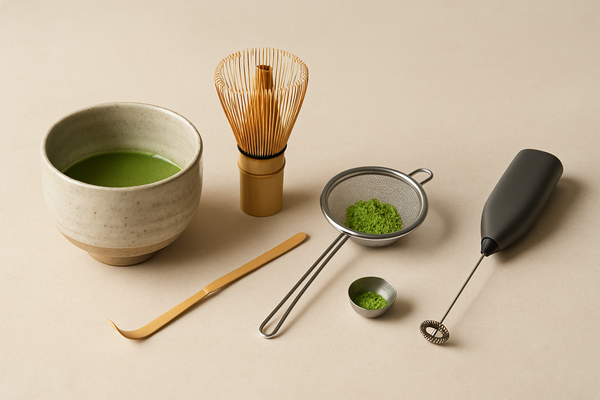
A chasen, or bamboo whisk, does more than create foam. It also helps loosen the powder evenly. Without one, the most helpful step is to sift your matcha first.
A shaker or small jar is the easiest method
For cold matcha, or matcha made with slightly warm water, a shaker or small tightly closing bottle works well.
Matcha: about 2 g, or roughly 1 teaspoon
Water or lukewarm water: 60–80 ml
Shake time: about 10–15 seconds
Add the water first, then the matcha. This helps prevent dry powder from sticking to the bottom.
One important note: do not shake boiling water in a sealed container. Pressure can build up quickly. For this method, room-temperature water or lukewarm water is the safer choice.
For warm matcha, try a milk frother
If you prefer warm matcha, place 2 g of sifted matcha and about 60 ml of water at 70–80°C in a tall cup. Use a milk frother briefly.
Keep the frother slightly above the bottom of the cup and move it gently for 5–10 seconds. Overmixing can make the foam coarse or cause splashing.
If you only have a spoon, make a paste first
When you have no special tools at all, add a very small amount of water to the matcha and stir it into a smooth paste. Then add more water little by little.
This method will not create much foam, but it helps reduce clumps. It is especially useful for matcha lattes, yogurt, smoothies, and simple desserts.
Small details that improve the taste
If your matcha tastes too sharp, try lowering the water temperature. Water around 70–80°C often brings out a calmer balance of umami, gentle sweetness, and bitterness.
Storage also matters. After opening, keep matcha sealed away from light, moisture, heat, and strong odors.
If you are choosing matcha for everyday use, it helps to start with a grade that suits how you drink it. You can browse ICHIZEN’s matcha collection and choose at your own pace.
Matcha can be part of your day, even without a whisk
A bamboo whisk gives matcha a beautiful traditional texture, but everyday tea does not need to be complicated.
Start with 2 g of matcha, 60 ml of water, and a slightly lower water temperature. With tools you already have in your kitchen, you can still enjoy the quiet aroma of matcha.
FAQ
Does matcha taste worse without a bamboo whisk?
It will be slightly different from whisked matcha, especially in foam and smoothness. But if you sift the powder and control the water temperature and ratio, it can still taste very good.
Can I use boiling water in a shaker for matcha?
It is better not to. Shaking boiling water in a sealed container can build pressure and may be unsafe. Use room-temperature or lukewarm water for shaker matcha.
What is the best way to use a milk frother for matcha?
Use a tall cup, about 2 g of matcha, and 60 ml of water at 70–80°C. Keep the frother slightly above the bottom and mix briefly to reduce splashing.
Can I make a matcha latte without a whisk?
Yes. First mix matcha with a small amount of water to make a smooth paste, then add milk. Dissolving the matcha first helps prevent clumps in the latte.