Hello from ICHIZEN. If you made a bowl of matcha and thought, “Why does my matcha taste bitter?” you are not alone.
In many cases, the tea itself is not the only reason. Water temperature, powder ratio, whisking, and storage can all change the taste quite noticeably. Let’s go through the simple fixes, one by one.
Why does matcha taste bitter?
Matcha naturally has a little bitterness and astringency. That is part of its character. But if the taste feels harsh, burnt, overly sharp, or powdery, something in the preparation may need adjusting.
The most common cause is water that is too hot. Boiling water can bring out more bitterness and make the bowl feel heavier on the tongue.
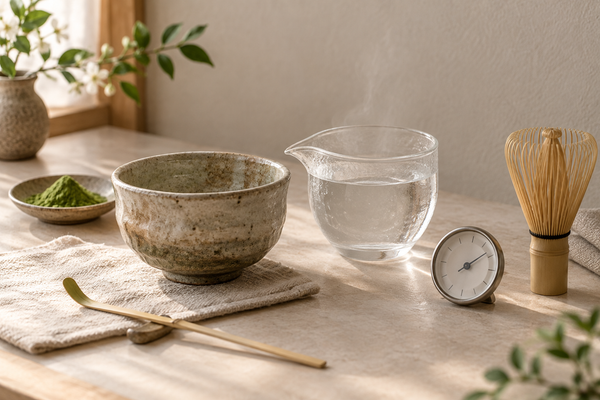
Start with 70–80°C water
After boiling your water, let it cool slightly before using it for matcha. A good range to try is about 70–80°C, or 158–176°F.
If you do not have a thermometer, simply wait a little after boiling or pour the water into another cup first. Even this small step can soften the taste.
Are you using too much matcha?
When matcha tastes very bitter, the bowl may simply be too concentrated. For usucha, or thin tea, try about 1.5–2g of matcha with 60–70ml of water.
That is roughly two chashaku scoops, or about one lightly filled teaspoon. If the taste is still too strong, use a little less powder next time or add a little more water.
Too bitter: lower the water temperature or use slightly less powder
Too powdery: sift first and whisk thoroughly to the bottom
Too weak: use a little more powder or less water
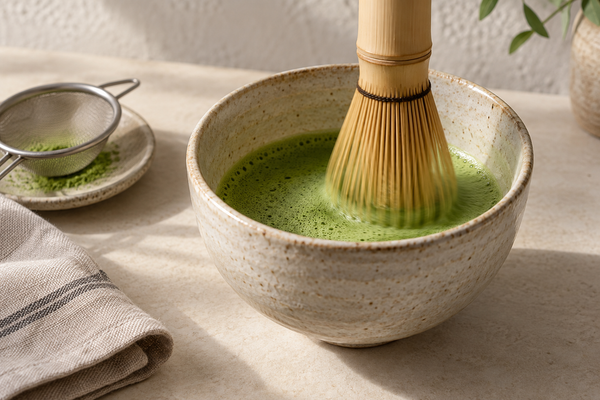
Sifting can make the texture much smoother
Matcha is an extremely fine powder. During storage, small clumps can form, and those clumps may not dissolve smoothly in water.
Sifting your matcha before whisking is a small step, but it can make the mouthfeel much softer. If your matcha tastes gritty or uneven, this is one of the first things to try.
If you would like to review the full preparation flow, our step-by-step matcha guide may be helpful.
Good foam can soften the impression of bitterness
Foam is not only for appearance. When air is incorporated into the tea, the texture becomes lighter and the bitterness can feel less sharp.
Instead of pressing the whisk hard against the bottom, move your wrist quickly back and forth. At the end, gently smooth the surface to refine the bubbles.
Storage also affects bitterness
Matcha is sensitive to light, heat, moisture, and air. Once opened, its aroma and color gradually change, and the flavor can become flatter or more bitter.
Keep the container tightly closed and store it in a cool, dark place. If you refrigerate it, let the container come closer to room temperature before opening so condensation is less likely to form inside.
If it still tastes bitter, consider the type of matcha
Some matcha is made with lattes, baking, or sweetened drinks in mind. These teas can taste stronger when prepared with water only.
For drinking straight, choose a matcha suited to usucha, with a rounder and more balanced taste. ICHIZEN’s matcha is selected and refined from Kyoto Uji matcha by Wakimoto Jokoen, a fourth-generation tea wholesaler with tea-judging expertise. It is machine-milled into an ultra-fine, uniform powder for a smooth daily bowl.
A bitter bowl can often be improved
If your matcha tastes bitter, begin with three gentle adjustments: cool the water, measure the powder, and sift before whisking.
Your next bowl may already feel softer. Take your time, and let your preferred taste become clearer with each preparation.
FAQ
Why is matcha bitter?
Matcha naturally has some astringency and bitterness, but very hot water, too much powder, or matcha that has lost freshness can make bitterness feel stronger.
How can I make matcha less bitter?
Try lowering the water temperature to about 70–80°C, measuring 1.5–2g of powder, and sifting the matcha before whisking. These steps help soften the taste.
Does powdery matcha mean the quality is poor?
Not always. Matcha can taste powdery if it is not sifted or if powder remains at the bottom of the bowl. Sifting and whisking well often improves the texture.
How soon should I use matcha after opening?
After opening, matcha gradually changes in aroma, color, and flavor. Keep it tightly sealed in a cool, dark place and use it as soon as practical.