Hello from ICHIZEN. If you are new to matcha, you may be wondering, “What does matcha taste like?” or “Will it be too bitter for me?”
The short answer is: matcha is layered. A good cup brings together umami, a soft natural sweetness, fresh green aroma, and a gentle bitterness that gives the tea its shape.
So, what does matcha taste like?
At the center of matcha’s flavor is umami — a round, savory depth that feels fuller than many brewed green teas. Because matcha is powdered tea leaf, you drink the leaf itself rather than only an infusion.
You may also notice a grassy, fresh aroma, a clean finish, and a little astringency. When prepared with care, the bitterness should feel balanced rather than harsh.
The flavors you may notice in one bowl
Umami
Umami gives matcha its mellow body. It is one reason matcha can feel smooth and satisfying even when prepared simply with water.
Bitterness and astringency
A little bitterness is part of matcha’s character. If the cup tastes sharp, the water may be too hot, or the powder-to-water ratio may be too strong for your taste.
Aroma
Matcha can smell fresh and green, softly roasted, or gently creamy when mixed with milk. Aroma changes after opening, so storage matters more than many people expect.
Why does matcha sometimes taste too bitter?
If your first cup feels bitter, please do not assume matcha is not for you. A few small adjustments can make the flavor much calmer.
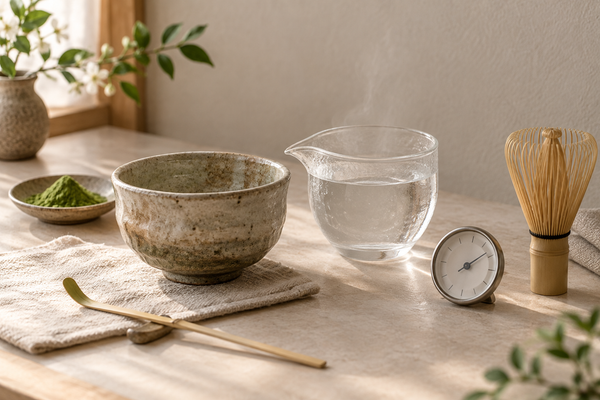
Use water around 70–80°C, rather than boiling water.
For usucha, start with about 1.5–2 g of matcha and 60–70 ml of water.
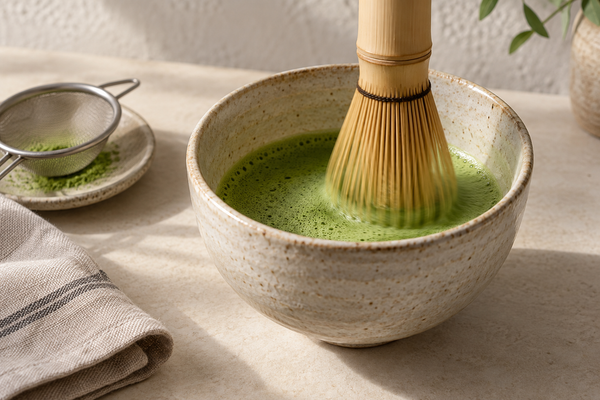
Sift the powder before whisking to reduce clumps.
Keep opened matcha tightly sealed, away from heat and light.
How to enjoy matcha in a way that suits you
If you like a clean, direct taste, try matcha as usucha, the lighter everyday style. If you prefer something softer, a matcha latte can make the bitterness feel rounder because milk adds sweetness and body.
For baking or desserts, look for enough aroma and depth to remain present alongside sugar and dairy. Starting with a small amount helps you find the strength that feels right to you.
How ICHIZEN’s matcha is made to taste approachable
ICHIZEN’s matcha comes from Kyoto Uji and is selected and refined by Wakimoto Jokoen, a fourth-generation green-tea wholesaler with tea-judging expertise connected to Kyoto tea evaluation competitions.
Our matcha is machine-milled into an ultra-fine, uniform powder. This helps create a smooth mouthfeel when whisked and allows it to blend naturally in lattes and other preparations.
If you are choosing your first matcha
Matcha flavor depends on the tea, the fineness of the powder, preparation, and storage. Try not to judge matcha from one cup alone; changing water temperature or the amount of powder can make a clear difference.
If you would like a broader foundation, you may also enjoy our beginner’s guide to what matcha is. From there, you can find the strength and style that feels most comfortable to you.
FAQ
Is matcha a bitter drink?
Matcha has a natural bitterness and astringency, but it also has umami and a soft sweet aroma. Using water that is not too hot and avoiding too much powder can make it much easier to enjoy, especially for beginners.
What kind of matcha tastes good in a latte?
For matcha lattes, choose matcha with enough body and aroma to stand up to milk, without bitterness being the only strong note. A little sweetness can help, but good umami keeps the flavor from feeling flat.
How soon should I drink matcha after opening?
Please follow the best-before date on the product, but after opening, matcha’s aroma fades more easily. Keep it sealed, away from heat and light, and enjoy it as soon as practical for the clearest flavor.
Does matcha taste different from powdered green tea?
Yes. Matcha is made from tencha and is generally enjoyed for umami and a shaded-tea aroma. Powdered green tea may be made from sencha or other teas and can taste lighter, brisker, or more astringent.