Hello from ICHIZEN. If you have ever paused in the morning and wondered, “Should I make matcha or coffee today?”, you are not alone.
In simple terms, a typical cup of coffee usually contains more caffeine than a typical bowl of matcha. But matcha often feels different: quieter, rounder, and less sharp for many people.
How much caffeine is in a cup?
As a general guide, an 8 oz / 240 ml cup of brewed coffee often contains about 80–120 mg of caffeine. Matcha powder is commonly estimated at around 20–35 mg of caffeine per gram.
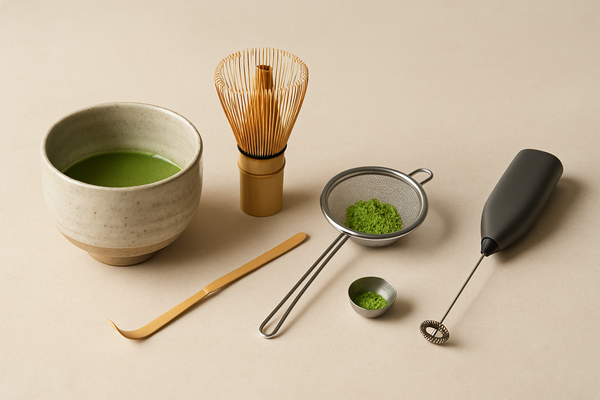
If you prepare usucha, or thin tea, with about 2 g of matcha, that may place one serving around 40–70 mg of caffeine. The exact number depends on the tea, the amount of powder, and how you prepare it.
This is why “matcha caffeine vs coffee” is not only about the drink name. It is also about serving size, strength, and your own sensitivity.
Why does matcha often feel gentler?
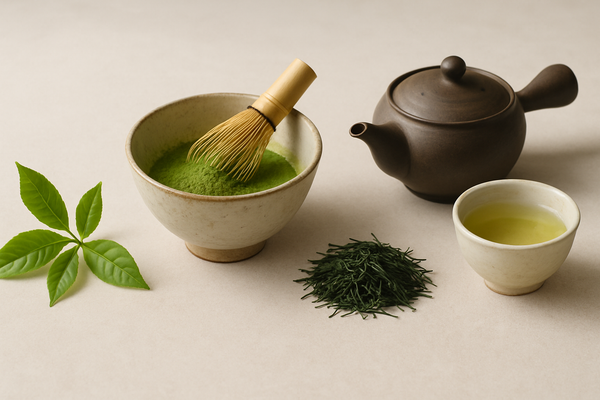
Matcha is made by finely milling the tea leaf, so you drink the whole leaf in powdered form. Along with caffeine, you also experience its umami, soft sweetness, and amino acids such as L-theanine.
That balance can make matcha feel less abrupt than coffee for some people. Coffee often has a clear, bright lift, while matcha may feel more like a quiet transition into focus.
Of course, this is not a medical effect or a guarantee. Everyone responds to caffeine differently.
How might you choose by time of day?
If you are new to matcha, start gently and notice how your body responds. If you are sensitive to caffeine, it may be wise to avoid strong matcha or coffee late in the day.
Morning reset: coffee, or a slightly stronger bowl of matcha
Before focused work: a bowl of thin matcha
Late afternoon or evening: a smaller amount, or an earlier cutoff time
A matcha latte may taste softer because milk or plant-based milk rounds the edges. Still, the caffeine depends on how much matcha powder you use, not on the fact that it is a latte.
What should you look for in matcha?
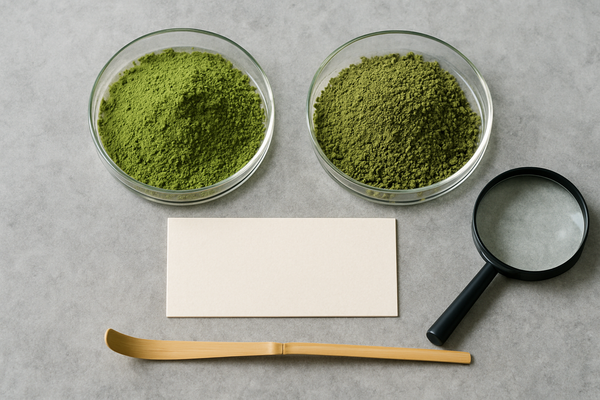
Caffeine is only one part of the experience. Aroma, umami, bitterness, texture, and aftertaste all shape whether a matcha suits your daily rhythm.
ICHIZEN offers single-origin, high-grade matcha from Wakimoto Jokoen in Uji, Kyoto. If you would like to compare options quietly, you can browse our matcha collection at your own pace.
A gentle conclusion
Coffee and matcha both have a place. Coffee can feel crisp and direct; matcha can offer a softer, more contemplative kind of alertness.
Try paying attention to powder amount, time of day, and how you feel afterward. That is often the simplest way to find the cup that belongs in your routine.
FAQ
Does matcha have less caffeine than coffee?
In a typical serving, matcha often has less caffeine than brewed coffee. However, the amount changes depending on how much matcha powder you use and how strong you make it.
Is it okay to drink matcha in the afternoon?
Many people drink matcha in the afternoon, but if you are sensitive to caffeine, consider avoiding it later in the day. Starting with a small bowl of thin matcha can help.
Does a matcha latte have less caffeine?
Milk makes the taste softer, but it does not reduce the caffeine in the matcha itself. The caffeine amount mainly depends on how much matcha powder is used.
How can I drink matcha on a lower-caffeine day?
Use a smaller amount of matcha powder and avoid very strong preparations or large lattes. You can also drink it earlier in the day or simply take a day off.