
Matcha vs Green Tea vs Sencha vs Gyokuro: A Quick Comparison
Supervised by Wakimoto Jokoen Co., Ltd. — Uji tea manufacturer, Kyoto
Share
Hello from ICHIZEN. If you have ever wondered whether matcha and green tea are different things, you are not alone.
The simple answer is this: green tea is the larger category, and matcha, sencha, and gyokuro are all types of green tea. The main differences come from cultivation, processing, form, and how you drink them.
Start here: the quick comparison chart
| Tea | Cultivation | Processing | Form | How to drink | Taste profile | How to choose |
|---|---|---|---|---|---|---|
| Green tea | An umbrella category for steamed, non-oxidized teas; cultivation varies by type | Fresh leaves are heated to stop oxidation, then processed | Leaves, powder, and other forms | Depends on the tea: whisked, infused, or prepared another way | From fresh and brisk to rich and umami-led | Best when you want the overall map of Japanese tea |
| Matcha | Made from shade-grown tencha | Tencha is dried without rolling, then milled into a very fine powder | Fine powder | Whisked with water; you drink the whole leaf | Umami, body, gentle bitterness | Good for usucha, lattes, desserts, and a more concentrated taste |
| Sencha | Often grown in open fields, though some sencha is briefly shaded | Steamed, rolled, and dried | Needle-like leaf tea | Infused in hot water, usually with a teapot | Fresh aroma, balanced astringency and umami | Easy to enjoy as an everyday green tea |
| Gyokuro | Typically shade-grown for about 20 days | Steamed, rolled, and dried | Fine, twisted leaf tea | Infused slowly, often with cooler water | Deep umami, softness, lingering finish | For quiet moments when you want to savor a small cup |
If you would like to see the wider family of teas first, our guide to types of tea gives a helpful overview.
The biggest difference is how you drink the tea
Matcha is made by milling tencha into a fine powder, then whisking that powder into water. Because of this, you drink the tea leaf itself.
Sencha and gyokuro are different. Their leaves are steamed, rolled, and dried, then infused in hot water. The leaves stay in the teapot, so the texture, strength, and aroma feel different from matcha.
If the words still feel a little tangled, our article on matcha vs green tea explains the category difference in more detail.
Which tea suits your taste?
Choose sencha when you want something fresh and easy
Sencha is loved for its clean aroma and balanced briskness. It works well with meals, during a work break, or whenever you want a simple everyday cup.
Choose gyokuro when you want slow, rounded umami
Gyokuro’s shade cultivation gives it a softer, more umami-forward character. It is often brewed in small amounts with cooler water, so the preparation itself becomes part of the pleasure.
Choose matcha when you want body and versatility
Because matcha is a powder, it can be whisked traditionally, blended into milk, or used in sweets. Its taste appears directly in the cup, so aroma, smoothness, and fineness matter.
If you are choosing between these two shade-grown styles, our guide to matcha vs gyokuro may help you picture the drinking experience more clearly.
How should you choose for the first time?
Rather than asking which tea is “better,” it is kinder to ask which tea fits your day. Do you want a quick morning cup, a calm weekend ritual, or something you can use in a latte?
- For everyday ease, choose sencha
- For quiet umami and slower brewing, choose gyokuro
- For lattes, sweets, and a fuller taste, choose matcha
- If you are unsure, compare small amounts first
Prices vary with cultivation, processing, quality, and intended use. A higher price does not always mean the best fit for you; the tea you can enjoy comfortably is often the one you return to most.
A simple way to remember the difference
Think of green tea as the large family. Matcha, sencha, and gyokuro all live inside it.
Matcha is powdered tea that you drink whole. Sencha and gyokuro are leaf teas that you infuse in water. Once you see that difference, choosing becomes much easier.
Start with the way you want to drink, not just the name on the package. Your best first choice is the one that fits your own quiet moment.
Public references consulted: Kyoto Prefecture Tea Industry Council, “Uji Tea Q&A” and “Types of Tea”; Ministry of Agriculture, Forestry and Fisheries, “Nippon Traditional Food Guide: Uji Tea”; Japan Tea Central Public Interest Incorporated Association, “Green Tea Labeling Standards: Names and Definitions.”
FAQ
Are matcha and green tea different things?
Not exactly. Matcha is one type of green tea. Green tea is the broader category that includes matcha, sencha, gyokuro, and other teas.
Which is more expensive, gyokuro or matcha?
Both can be relatively expensive because they require careful cultivation and processing. The final price depends on quality, origin, and intended use.
Can I brew sencha and gyokuro in the same teapot?
Yes, you can use the same teapot. Adjust the brewing: gyokuro is usually steeped slowly with cooler water, while sencha often uses slightly hotter water.
For a first purchase, should I choose matcha, sencha, or gyokuro?
Choose sencha for an easy daily cup, matcha for lattes or sweets, and gyokuro when you want to slowly enjoy deep umami in small servings.
Column
Related Articles
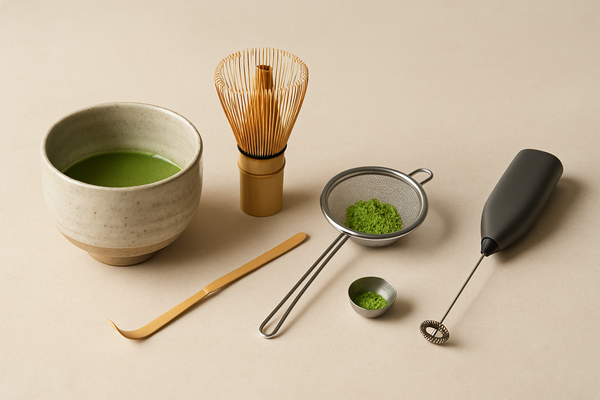
Matcha Tools Guide: Chasen, Bowls, and Practical Alternatives
A calm, practical guide to matcha tools for home use. Learn what a basic set includes, what you really need to start,...
Read More →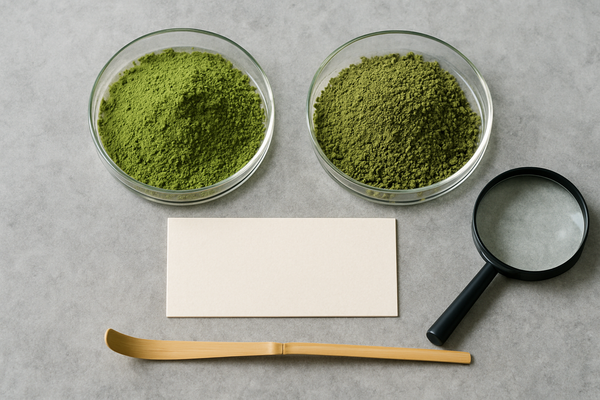
How to Spot Real Matcha in Japan: Colorings, Origins, and Uji Matcha Labels
A calm guide to reading matcha labels: coloring additives, ingredients, powdered green tea, and what “Uji matcha” act...
Read More →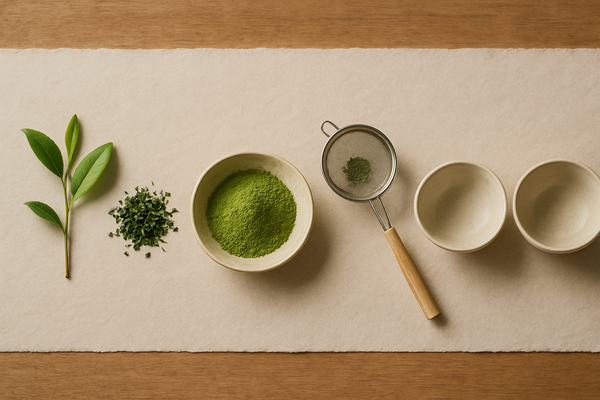
What Makes Premium Matcha Different? Grade, Judging, and Price
Premium matcha is not defined by price alone. This guide explains how shading, harvest conditions, refining, blending...
Read More →