Hello from ICHIZEN. If you have ever wondered about matcha vs gyokuro, you are not alone. They are both refined Japanese green teas with deep umami, but the way you experience them is quite different.
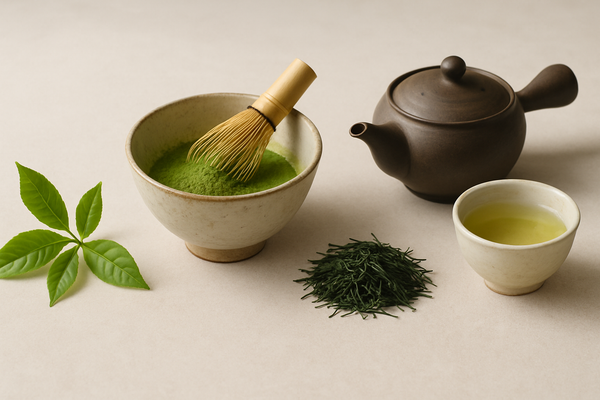
In simple terms, matcha is a fine powder whisked into water, so you drink the tea leaf itself. Gyokuro is a leaf tea brewed gently in a small amount of warm water, so you enjoy the infusion.
What is the main difference between matcha and gyokuro?
The clearest difference is the final form of the tea.
Matcha: made from tencha and milled into a very fine powder, then whisked with water.
Gyokuro: shaped into slender tea leaves and brewed in a teapot.
Both teas may be shaded before harvest to develop sweetness and umami. But once the leaves are processed, the drinking experience changes: matcha is prepared as a suspension, while gyokuro is steeped and poured.
If you would also like to understand the broader category, our guide to matcha vs green tea may be helpful.
How the process shapes the taste
Matcha is powdered tencha, whisked into water
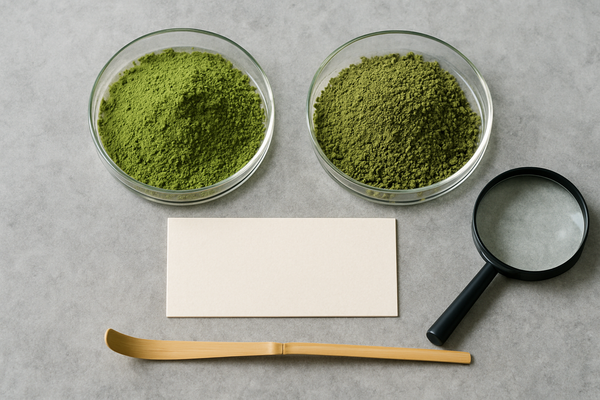
For matcha, the leaves are steamed, dried without the rolling used for many leaf teas, refined, and then milled into powder. ICHIZEN matcha is selected and refined by Wakimoto Jokoen in Uji, Kyoto, and machine-milled into an ultra-fine, uniform powder.
Because you drink the powdered leaf itself, matcha gives you aroma, umami, gentle bitterness, and texture all at once. For usucha, or thin tea, a simple starting point is about 1–2 g of matcha with 60–80 ml of hot water.
Gyokuro is brewed slowly at a lower temperature
Gyokuro is a leaf tea. It is often brewed with cooler water, around 40–60°C, to draw out sweetness and umami while keeping bitterness restrained.
A common guide is 4–6 g of leaves with a small amount of water, steeped for around two minutes. It is usually enjoyed in small sips, almost like a concentrated broth of tea.
How do they taste different?
Matcha tends to feel full and smooth. The aroma rises quickly, and the body of the tea is easy to feel because the whole leaf is present in the cup.
Gyokuro is quieter and more concentrated. Its sweetness and savory depth unfold slowly, especially when brewed with patience and a lower water temperature.
One is not “better” than the other. The better choice depends on the moment you want: a rounded, whisked bowl, or a slow, careful infusion.
Which should you choose first?
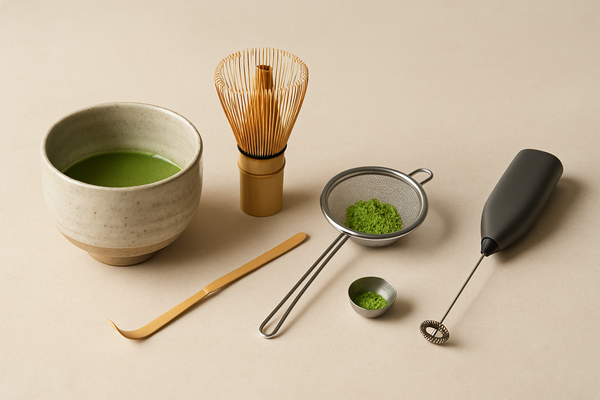
Choose matcha if you want one tea that can be enjoyed straight, as a latte, or in sweets. A bamboo whisk is helpful, but you can also begin with a small whisk or shaker while you learn your preference.
Choose gyokuro if you enjoy the quiet ritual of brewing with a teapot. Just be careful with water temperature; boiling water can make the tea taste sharper and more astringent.
How to store both teas
Matcha and gyokuro are sensitive to light, heat, moisture, and strong odors. Keep them sealed, and use them while the aroma is still fresh.
Matcha is especially delicate because the powder has a large surface area. Take out only what you need, then close the container promptly.
A simple way to remember it
Matcha is whisked. Gyokuro is brewed. Matcha gives you the richness of the leaf itself; gyokuro gives you the quiet sweetness of a careful infusion.
If you are unsure, picture how you want to drink your tea. A morning bowl, a latte, or a dessert points naturally toward matcha. A slow weekend session with a small teapot may be the right moment for gyokuro.
FAQ
Which has more caffeine, matcha or gyokuro?
Both contain caffeine. The amount varies depending on leaf quantity, water volume, and preparation, so it is hard to give one fixed answer. If you are sensitive in the evening, start with a smaller serving.
Can I grind gyokuro and drink it like matcha?
Gyokuro is made to be brewed as a leaf tea. You can grind it, but it will not be the same as matcha because the leaf processing and powder texture are different.
Is matcha better than gyokuro for matcha latte?
Yes, matcha is generally better for lattes. As a powder, it mixes more easily with milk or plant-based milk and gives clearer color, aroma, and flavor.
Are matcha and gyokuro made from the same tea plant?
Both are made from Camellia sinensis, the tea plant. The differences come mainly from shading, post-harvest processing, and whether the tea is powdered or brewed as leaves.