Should matcha be called matcha or green tea in English? The simple answer is matcha. Green tea is the broader category, while matcha is one specific type. When speaking to someone who is unfamiliar with it, you can say, “Matcha is a finely ground Japanese green tea powder.”
What is the difference between matcha and green tea?
Matcha is a type of green tea, but not all green tea is matcha.
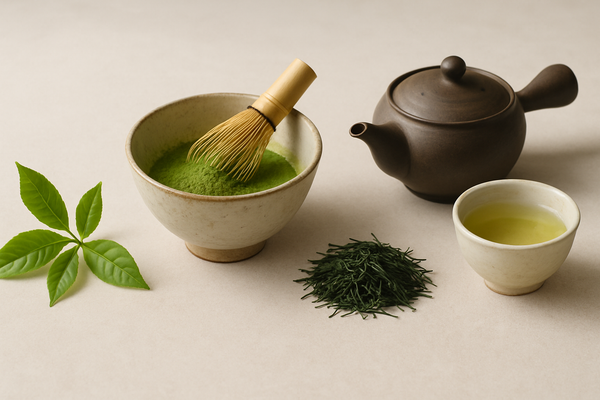
Green tea is a broad category that includes teas such as sencha, gyokuro, and matcha.
Matcha is a powdered green tea made by finely grinding processed leaves called tencha.
Regular green tea is usually steeped in water, and the leaves are removed before drinking.
Matcha is whisked into water, so the powdered tea itself is consumed.
Calling matcha green tea is not entirely wrong, but it does not identify the specific kind of tea. Use matcha as the name and green tea when explaining its category.
Matcha is different from regular green tea because the powdered tea is whisked into water rather than steeped and removed.
Matcha is called “matcha” in English
The Japanese word has become the standard English name. You normally do not need to say matcha tea because matcha already refers to tea. The longer form sometimes appears on menus and packaging to help first-time customers understand the product.
Spelling, capitalization, and pronunciation
Standard spelling: matcha
At the beginning of a sentence or in a title: Matcha
In an ordinary sentence: matcha
Approximate pronunciation: MAT-cha, with the first syllable stressed
Matcha is the familiar English spelling. Pronounce tch as a single “ch” sound.
When to use matcha and green tea
When naming the tea
This is matcha from Uji, Kyoto.
When explaining its category
Matcha is a type of Japanese green tea.
When speaking to someone new to matcha
Matcha is a finely ground Japanese green tea powder.
Green powder is too vague. Japanese green tea powder explains both what the product is and where the tradition comes from.
Ready-to-use English explanations
A ten-second introduction
Matcha is a traditional Japanese powdered green tea. It has a rich umami flavor and a gentle bitterness.
A thirty-second explanation
Matcha is a finely ground green tea powder from Japan. The tea plants are shaded before harvest, and the processed leaves, called tencha, are ground into a fine powder. Unlike regular green tea, matcha is whisked into water, so you enjoy the tea itself rather than only an infusion.
For more cultural background, read our guide to the history of matcha.
Explaining the connection to tea ceremony
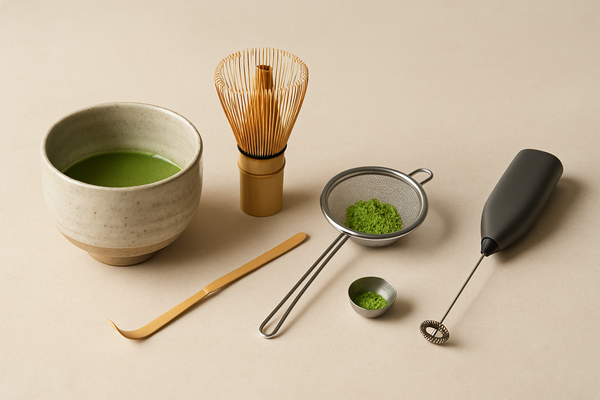
Matcha is traditionally prepared with a bamboo whisk called a chasen. It is closely connected to the Japanese tea ceremony.
It has a smooth umami taste with a mild bitterness.
Please whisk it until a fine foam forms.
You can enjoy it with hot water or as a matcha latte.
When describing flavor, bitter by itself can sound negative. Pair it with words such as umami, smooth, creamy, fresh, vegetal, or mildly sweet to communicate a fuller sensory impression.
Common wording mistakes
Powdered green tea can refer broadly to other green tea powders, so it is not always an exact synonym for traditionally produced matcha. Use matcha as the name and finely ground Japanese green tea powder as the explanation.
A chasen is a bamboo whisk. Prepare matcha and whisk matcha are both natural expressions. Make matcha is understandable, but whisk is more specific when describing the action.
Summary
Matcha is the English word for 抹茶. Green tea is the broader category, and matcha is one type within it. Begin with the sentence, “Matcha is a finely ground Japanese green tea powder.” Then add details about flavor, production, or tea ceremony according to your listener’s interest.
To introduce matcha through aroma, color, and flavor as well as words, explore ICHIZEN Uji matcha.