Hello from ICHIZEN. If you usually reach for coffee before exercise, you may be wondering whether matcha can play the same role.
The short answer is yes, matcha can be a thoughtful pre-workout option—especially when you want to feel lightly focused without choosing something heavy.
Still, it is not a magic cup for everyone. Your best amount depends on your caffeine sensitivity, the time of day, and the kind of movement you are planning.
Who might enjoy matcha before a workout?
Matcha naturally contains caffeine, along with the amino acid L-theanine, which contributes to its savory, rounded character. If you prefer a calmer-feeling switch into workout mode, matcha may be worth trying.
It can fit especially well before yoga, a light run, or a gym session. It is also easy to drink unsweetened, which may be useful on days when you do not want a sugary pre-workout drink.
If you are new to drinking matcha before exercise, try it about 30 to 60 minutes before your workout. A light serving made with around 1 gram of matcha powder is a gentle place to begin.
Even if you enjoy matcha regularly, 1 to 2 grams per cup is often enough for a pleasant flavor. Stronger is not always better, especially if you are sensitive to caffeine.
Morning or midday workout: try one light cup of matcha
Evening workout: keep it small, or skip it if caffeine affects your sleep
Empty stomach: choose a lighter cup, or pair it with water or a small snack
Keep the preparation light
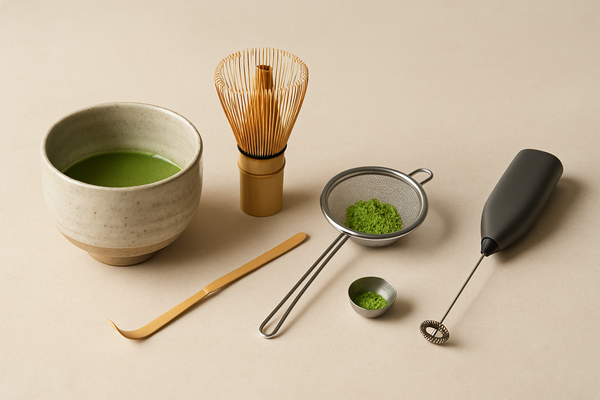
Before movement, a simple drink is usually easiest. You can shake matcha with cold water, or whisk it with a small amount of warm water before adding more water.
ICHIZEN matcha is Kyoto Uji matcha selected and refined by Wakimoto Jokoen. It is machine-milled into an ultra-fine, uniform powder, so it disperses smoothly and is easy to prepare even before a busy workout.
A few things to avoid
Drinking matcha right before exercise may feel uncomfortable for some people, especially before running. Giving yourself a little time can make the experience easier.
Also, matcha contains caffeine. If you train at night, a strong cup may make it harder for some people to wind down afterward. Please adjust the amount to your body and your daily rhythm.
A quiet pre-workout possibility
Matcha can be a gentle way to prepare for movement when you want something clean, simple, and not too heavy. Begin lightly, notice how you feel, and let your own routine guide the right cup.
FAQ
How long before a workout should I drink matcha?
A practical guide is 30 to 60 minutes before exercise. If you are new to it, start with a lighter cup made with about 1 gram of matcha powder and adjust based on how you feel.
Can I drink matcha on an empty stomach?
Some people find strong matcha a little intense on an empty stomach. If that sounds like you, make it lighter or enjoy it with water or a small amount of food.
Is coffee or matcha better before a workout?
Coffee may suit you if you like a sharper caffeine feel, while matcha may suit you if you prefer a calmer transition. With either drink, consider caffeine amount and timing.
Is it okay to drink matcha before an evening workout?
Matcha contains caffeine, so it may affect sleep for some people when consumed later in the day. In the evening, consider a smaller serving or skipping it.