
How to Choose a Matcha Whisk: Chasen Types, Prongs & Sets
Supervised by Wakimoto Jokoen Co., Ltd. — Uji tea manufacturer, Kyoto
Share
For a first matcha whisk, choose a bamboo chasen made for usucha, or thin matcha. A kazuho or 80-prong style is a practical starting point: its numerous flexible tips are designed for the quick, fine movement used to disperse matcha in water. A useful matcha whisk set needs only a whisk, a bowl wide enough to move it freely, and a fine sifter. A scoop and whisk holder are helpful, but a larger accessory count does not automatically make a better set.
Quick guide: which matcha whisk should you choose?
More prongs do not always mean better quality. The right chasen is the one shaped for the matcha you prepare. Prong names and counting conventions can also vary by maker, so read the intended use—such as usucha or koicha—in addition to the number on the label.
| Main use | A practical choice | Why it fits | What to check |
|---|---|---|---|
| Everyday usucha | Kazuho or 80-prong style | Many flexible tips move quickly through thin matcha | Prioritize an “usucha” label over the number alone |
| A fine layer of foam | 80- or 100-prong style | The relatively dense tips can agitate the surface finely | Do not press delicate tips hard against the bowl |
| Koicha | Koicha whisk with fewer, sturdier tips | Designed to knead thick matcha rather than whip it | Ask your teacher if you study within a tea school |
| Matcha latte | A standard usucha whisk | Smooths matcha with a small amount of water before milk is added | Whisk the matcha base, then add separately frothed milk |
| Travel | A shorter nodate whisk or a shaker | Easier to pack | Use a case that does not crush bamboo tips |
What is a chasen?
A chasen is the whisk used to disperse matcha in water inside a bowl. Some shops describe it as a “chasen whisk” or “matcha brush,” although matcha whisk is the clearer English name. Unlike a metal kitchen whisk assembled from separate wires, a traditional bamboo chasen is carved from one piece of bamboo. The bamboo is split into fine tines, the outer tips are shaved remarkably thin, and thread is woven around them to establish the whisk's inner and outer form.
The Takayama district of Ikoma, Nara, has maintained this craft for roughly 500 years. Takayama chasen is designated as a Traditional Craft by Japan's national government. Whisks vary by tea-school tradition and purpose, including the bamboo color, number and thickness of tips, overall length, and shape. Similar-looking whisks are not necessarily designed for the same preparation.
How should you compare prong counts and shapes?
For usucha, start with kazuho or an 80-prong style
Nara Prefecture divides chasen broadly into whisks for koicha and whisks for usucha, noting that kazuho and 80-prong styles are commonly produced for usucha. The City of Ikoma describes Takayama craftspeople splitting bamboo into approximately 60 to 120 tips depending on purpose and tea-school tradition.
A relatively high number of slender tips can be moved rapidly with the wrist, which suits the preparation of thin matcha and a fine surface texture. It would be misleading, however, to assume that a 100-prong whisk must outperform an 80-prong one. Flexibility, craftsmanship, bowl shape and technique all affect the result.
For koicha, choose stronger tips
Koicha uses more matcha and less water than usucha. Instead of rapidly creating foam, you slowly knead the thick mixture until it becomes smooth. A koicha whisk therefore tends to have fewer, sturdier tips.
If you attend formal tea lessons, ask your teacher before buying. Tea schools may prefer specific bamboo colors, thread colors and forms. If you are preparing everyday matcha at home without following a particular school, you do not need to begin with every school-specific detail.
White bamboo, black bamboo and smoked bamboo
Chasen can be made from white bamboo, black bamboo or aged smoked bamboo. These visual differences can reflect tea-school preferences and aesthetics, but color alone does not tell you how durable or easy to use a whisk will be. For a first whisk, intended use, maker, finish and comfortable handling are more useful selection criteria.
Does country of origin determine quality?
Origin can help you understand who made a whisk and how it was produced, but it is not a complete quality score. Avoid treating every imported whisk as identical or assuming that a place name answers every practical question. Look for clear product information:
- Intended use, such as usucha, koicha or outdoor tea
- Material, including the type of bamboo or a clearly identified resin
- Country, production region and maker when available
- Tips without obvious breaks, deep splits or severe distortion
- Care, drying and storage instructions
Handmade bamboo tools naturally vary in color, nodes and the exact flare of their tips. Small differences are not necessarily defects. Contact the seller if a new whisk arrives with many broken tips, a crack running deep into the handle, or a material that does not match the description.
What should a matcha whisk set include?
Products sold as a “matcha whisk set” range from two-piece bundles to presentation boxes filled with accessories. Compare the tools you will actually use rather than the total item count.
| Tool | Priority | What to look for |
|---|---|---|
| Chasen | Essential | For a first whisk, start with a kazuho or 80-prong usucha style |
| Matcha bowl | Essential | Enough width for lateral movement and a smooth interior curve |
| Fine sifter | Recommended | Breaks up compacted powder before water is added |
| Chashaku or measuring spoon | Choose one | A tool that helps you repeat a consistent amount |
| Whisk holder | Useful | Supports the flared shape and allows air around the washed whisk |
| Sealed storage case | Not for a damp whisk | Useful in transit, but not for drying after use |
If you already own a wide bowl and fine kitchen sifter, buying the whisk alone may be enough. For a gift, a clearly explained matcha starter kit with matcha, a bowl, chasen, sifter and preparation quantities lets the recipient begin without guessing.
Do you need a matcha whisk holder?
A ceramic whisk holder—also called a chasen-tate or whisk stand—is useful but not required to make matcha. Its flared form supports the shape of the bamboo tips and helps air circulate while the whisk dries. Ippodo Tea advises rinsing its bamboo chasen thoroughly with water only and placing it on a stand so that it dries well.
Without a stand, choose an airy place where the tips will not be crushed and the entire whisk can dry. Do not put a damp whisk back into a closed shipping case. Trapped moisture is a greater concern than whether every beginner owns a display stand.
How to care for a chasen—and when to replace it
- Before whisking: Briefly soak the tips in warm water so the bamboo becomes more flexible.
- While whisking: Use small movements from the wrist rather than grinding the whisk into the bottom of the bowl.
- After whisking: Rinse away matcha with water or warm water. Avoid scented detergent and dishwashers for a bamboo chasen.
- While drying: Check between the tips for remaining matcha and allow the whisk to dry fully with good airflow.
There is no universal replacement schedule. Frequency of use, technique and drying conditions all matter. Consider a new whisk when many tips have broken, the shape is badly distorted, clumps remain more often, or the same technique no longer mixes matcha easily. Remove any broken bamboo tip that falls into the bowl. For a complete routine, see how to clean and store a matcha whisk.
Five checks before you buy
- Decide whether you mainly make usucha, koicha or lattes.
- Read both the intended use and the prong description.
- Make sure your bowl gives the whisk room to move.
- Choose a place where the whisk can dry completely after use.
- Compare sets after removing duplicate or unnecessary accessories.
The best first whisk is not necessarily the most expensive one. It is a chasen suited to your everyday drink and simple enough to rinse, dry and use again. Once the tools are ready, follow our step-by-step guide to making matcha and build consistency with a familiar serving before changing the whisk or recipe.
FAQ
How many prongs should a beginner matcha whisk have?
For everyday usucha, a kazuho or 80-prong style is a practical starting point. Nara Prefecture identifies both as commonly produced usucha whisks. Because labels and counting conventions vary by maker, also look for a clear “usucha” description rather than choosing by number alone.
Can I use a chasen without a whisk holder?
Yes. A holder is not required for whisking. Rinse the chasen with water, keep the tips from being crushed and let it dry fully in a well-ventilated place. A holder simply helps support the flared shape while air reaches the whisk.
Can an electric frother replace a bamboo matcha whisk?
An electric frother is convenient for lattes and quick mixing, but it produces a different surface and experience from whisking usucha in a bowl. Choose a frother for convenience and milk foam; choose a chasen for traditional bowl preparation and more control over thin matcha.
How long does a bamboo matcha whisk last?
There is no fixed number of uses. Replace it when many tips are broken, the whisk is badly misshapen or matcha has become noticeably harder to mix. Gentle technique, rinsing after use and complete drying can reduce avoidable damage.
References
- Nara Prefecture. “Takayama Chasen.” Updated February 27, 2026.
- City of Ikoma. “Traditional Industries of Ikoma City.”
- Government of Japan. “The Way of Whisks.” Highlighting Japan.
- Ippodo Tea. “Whisk Stand (Chasen-tate).”
- Ippodo Tea. “How long can I use my chasen?”
Column
Related Articles
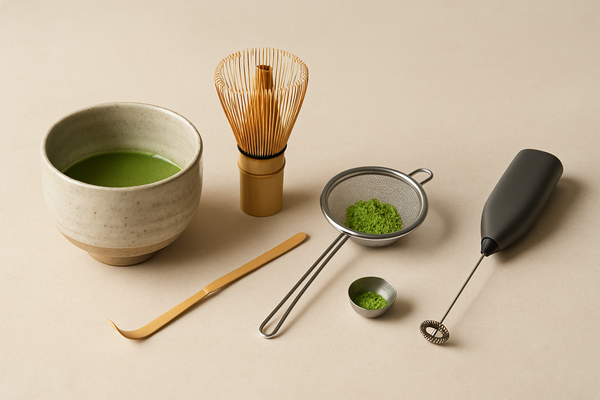
Matcha Tools Guide: Chasen, Bowls, and Practical Alternatives
A calm, practical guide to matcha tools for home use. Learn what a basic set includes, what you really need to start,...
Read More →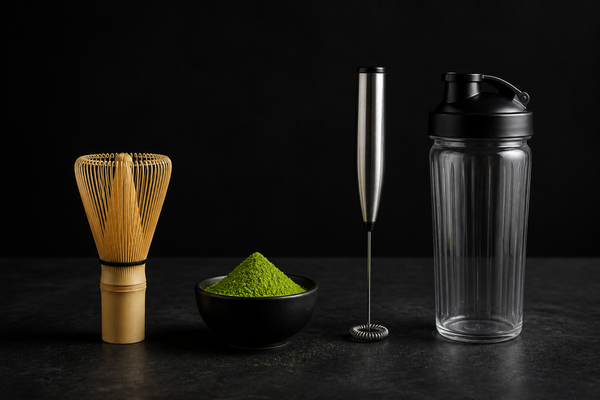
Best Matcha Mixer: Whisk vs. Frother vs. Shaker
A calm, practical comparison of the bamboo whisk, electric milk frother, and sealed shaker for matcha—looking at foam...
Read More →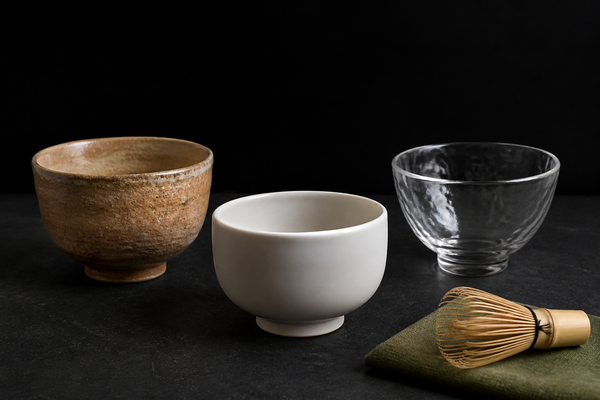
How to Choose a Matcha Bowl (Chawan): Size, Shape & Material
A calm beginner’s guide to choosing a chawan for matcha. Learn what makes a matcha bowl different from an everyday cu...
Read More →