

The 2026 Matcha Shortage: Why It’s Happening and How to Choose Calmly
Supervised by Wakimoto Jokoen Co., Ltd. — Uji tea manufacturer, Kyoto
Share
Hello from ICHIZEN. If you have noticed that matcha is harder to find, more expensive, or often out of stock, you are not imagining it.
The 2026 matcha shortage is not caused by one single event. In simple terms, global demand has grown faster than high-quality matcha can be cultivated, processed, selected, and milled.
Is there really a matcha shortage?
In many places, yes — at least in the way buyers experience it. A favorite matcha may be unavailable, cafés may have trouble securing consistent supply, and prices may feel less stable than before.
That does not mean every matcha has disappeared. The pressure is strongest around the quality levels people want for daily drinking: vivid color, pleasant aroma, smooth texture, and enough depth for both whisked tea and lattes.
So it may help to think of the shortage not as “no matcha at all,” but as “fewer choices in the quality range you actually want to drink.”
Why is the shortage being discussed in 2026?
Matcha has become an everyday drink overseas
For many years, matcha was most often associated with tea ceremony, Japanese sweets, or specialty tea. Today, people around the world enjoy it in lattes, smoothies, desserts, and café drinks.
That wider appreciation is a positive change. But when more people want matcha with good color, aroma, and balance, demand concentrates on a limited portion of the market.
Tea cannot be increased overnight
Matcha begins as tencha, a shaded tea leaf that is steamed, dried, and refined before it is made into powder. If you would like the full process, you can read our guide to how matcha is made.
Tea is not a product that can simply be doubled next month because orders increased this month. Fields, weather, harvest timing, refining, storage, and selection all affect supply.
Refining and milling capacity also matter
Matcha needs to be made into a very fine, even powder to create a smooth mouthfeel and pleasant whisking experience. ICHIZEN’s matcha is selected and refined by Wakimoto Jokoen in Kyoto Uji, then machine-milled into an ultra-fine, uniform powder.
Powder is not just powder. Particle size, handling, heat control, aroma, and color all influence how matcha feels and tastes in the bowl.
How long will the matcha shortage last?
No responsible answer can promise an exact month when it will end. Matcha supply depends on the rhythm of tea growth, harvest, refining, storage, and release.
In the short term, popular grades may remain tight, and restocks may sell through quickly. Over time, producers and tea wholesalers may adjust to demand, but increasing supply while keeping quality takes patience.
If you are buying matcha for home, the most practical approach is not to panic-buy. Choose an amount you can enjoy while it is still fresh, and store it carefully.
How should you choose during a shortage?
When supply is tight, price alone becomes a poor guide. Expensive matcha is not always the right match for your taste, and affordable matcha is not automatically unsuitable.
Start with how you plan to use it:
- For usucha: look for aroma, umami, and a clean finish
- For lattes: look for enough fragrance and gentle bitterness to stand up to milk
- For sweets: consider color, flavor after heating, and how much you need
If you want to understand the origin more clearly, our article on Uji matcha may help. Origin matters, but how the tea is selected and what it is suited for matter just as much.
What should you avoid?
First, avoid buying more than you can store well. Matcha is sensitive to light, heat, humidity, and surrounding odors. Even unopened matcha changes gradually if stored poorly.
Second, avoid judging quality by color or bitterness alone. Good matcha is about balance: aroma, umami, astringency, texture, and the finish after you swallow.
If you are new to matcha, strong bitterness may feel “authentic” at first. But for a bowl you want to return to, softness and a clean aftertaste are just as important.
A calm way to enjoy matcha now
The matcha shortage is partly a result of matcha being loved by more people around the world. At the same time, the tea fields and refining work behind it cannot be rushed.
That is why it is worth choosing each pouch with a little more care. Pick a grade that fits your use, open it when you are ready, and enjoy the aroma while it is fresh. This is a simple, respectful way to keep matcha in your daily life.
FAQ
Should I stock up on matcha during a shortage?
Large stockpiles are not recommended. Matcha is sensitive to light, heat, humidity, and odors, so it is better to buy an amount you can finish while it is still fresh.
Does the difference between culinary and drinking matcha matter more during a shortage?
Yes, it can. Drinking matcha should be chosen for mouthfeel and finish, while culinary matcha should be judged by color, flavor after heating, and how much you need.
Why can’t matcha production simply increase quickly?
Matcha depends on tea growth, shaded cultivation, harvesting, tencha processing, milling, and selection. Fields, weather, equipment, and quality control all limit quick expansion.
Can powdered green tea be used instead of matcha?
Sometimes it can work in lattes or sweets, but powdered green tea and matcha are different in material, processing, flavor, umami, aroma, and whisking character.
Column
Related Articles
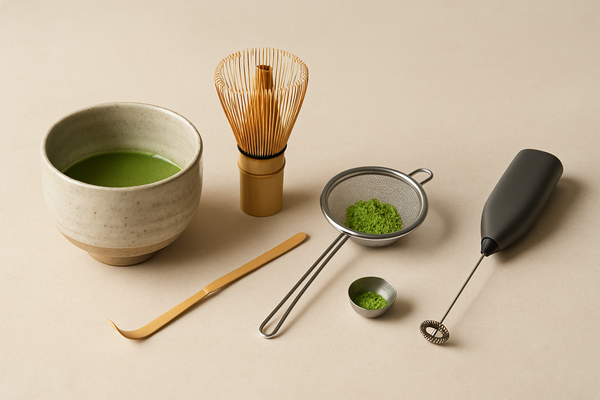
Matcha Tools Guide: Chasen, Bowls, and Practical Alternatives
A calm, practical guide to matcha tools for home use. Learn what a basic set includes, what you really need to start,...
Read More →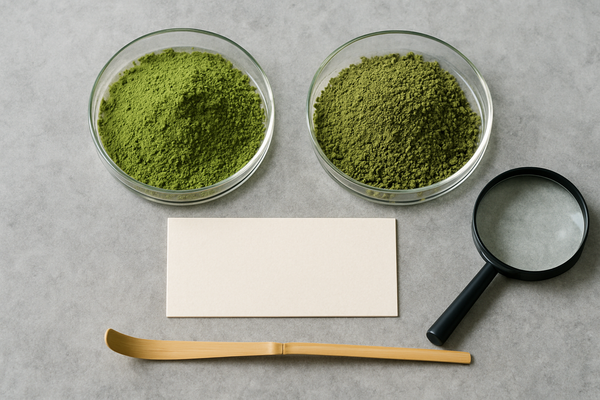
How to Spot Real Matcha in Japan: Colorings, Origins, and Uji Matcha Labels
A calm guide to reading matcha labels: coloring additives, ingredients, powdered green tea, and what “Uji matcha” act...
Read More →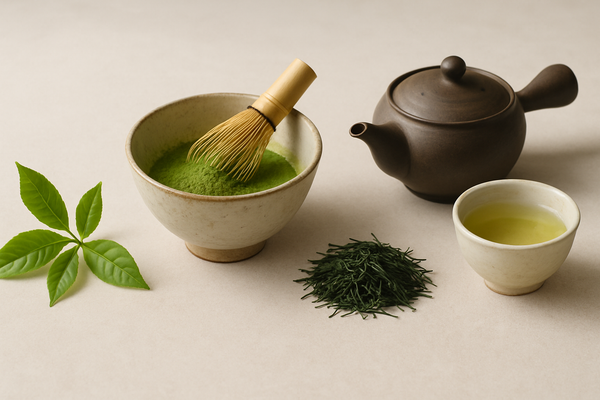
Matcha vs Green Tea vs Sencha vs Gyokuro: A Quick Comparison
Matcha, sencha, and gyokuro are all types of green tea. This guide compares how they are grown, processed, served, an...
Read More →