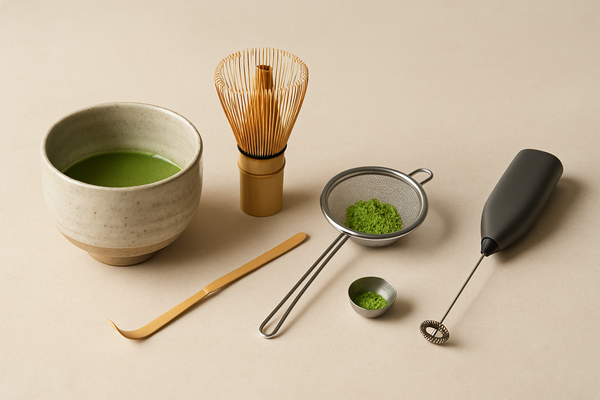
Hello from ICHIZEN. If you have ever compared matcha prices and wondered, “Why is matcha so expensive?”, you are not alone. The short answer is that the price reflects much more than the amount of powder in the bag: it comes from the tea leaves, the refining work, the fineness of the powder, freshness control, and how the matcha is intended to be used.
That does not mean the most expensive matcha is always the right one for you. A bowl of usucha, a creamy latte, and a batch of sweets each ask for a slightly different kind of matcha.
The price starts with tencha, the leaf used for matcha
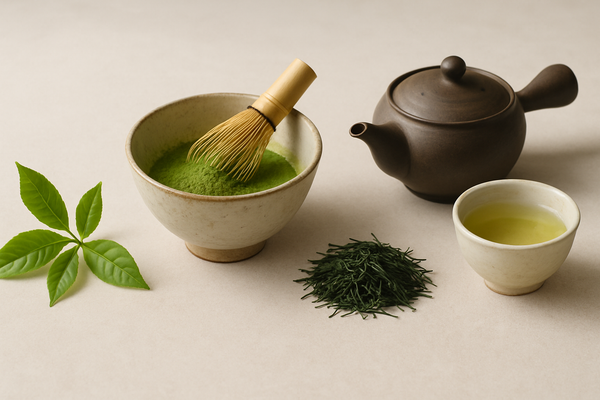
Matcha is not simply any green tea ground into powder. It is made from tencha, a tea leaf prepared specifically for matcha through careful cultivation, steaming, drying, sorting, and finishing.
The quality of this leaf shapes the color, aroma, umami, bitterness, and aftertaste. A vivid green color and a soft, rounded taste usually come from careful leaf production and thoughtful finishing.
Sorting and refining require trained judgment
The leaf itself is only one part of the price. Someone also has to judge how the tea should be finished, what its strengths are, and which use it is best suited for.
ICHIZEN’s matcha is selected and refined by Wakimoto Jokoen, a fourth-generation green-tea wholesaler working with Kyoto Uji matcha. Their tea-judging experience, including expertise developed through Kyoto tea evaluation competitions, helps guide the balance of aroma, color, and taste.
Even when two teas are both described as Uji matcha, they can feel very different in the cup. One may be softer, another more bitter, another better suited to milk. That careful judgment is part of what you are paying for.
Fine, even powder takes care to produce
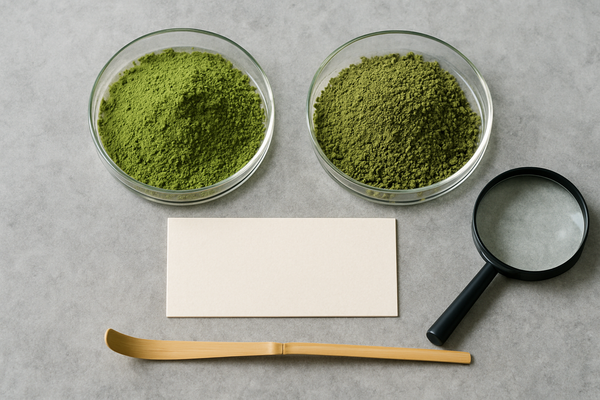
Texture matters in matcha. If the powder is too coarse, it can feel gritty. When it is very fine and uniform, the mouthfeel becomes smoother and the tea is easier to enjoy.
ICHIZEN’s matcha is machine-milled into an ultra-fine, even powder. The important point is not a romantic idea of the tool, but whether the finished powder gives you a smooth texture and works well for the way you want to drink it.
If you would like to understand the full process more clearly, you may enjoy our guide to how matcha is made.
Think about the price per serving
A bag of matcha can look expensive at first. But if you use about 2 grams for one bowl of thin matcha, a 20 gram bag gives you around 10 servings.
Your own amount may be different, of course. Still, looking at the cost per cup often makes matcha easier to compare with coffee, tea, or other daily drinks.
For thin matcha, look for a gentle bitterness, pleasant aroma, and enough umami.
For lattes, choose a matcha with color and flavor that can stand up to milk.
For sweets, consider how the tea works with heat, sugar, and other ingredients.
Before choosing an expensive matcha, check your purpose
If you are new to matcha, it is natural to think a higher price will prevent mistakes. But the best matcha for hot water alone may not be the best matcha for a strong latte.
Freshness is also important. Matcha is a delicate powder that can be affected by light, moisture, oxygen, and surrounding odors. After opening, seal it well and use it steadily so the flavor stays closer to what you paid for.
Price is a useful clue, but it is not the only answer. Your own way of drinking matcha should guide the choice.
A satisfying choice begins with your cup
Matcha can be expensive because many small steps add up: cultivation, refining, milling, packaging, and storage all matter. Rather than looking only at the price, start by imagining how you want to enjoy it.
Do you want a quiet morning bowl, or a soft afternoon latte? Once you know that, it becomes much easier to choose a matcha that feels right for you.
FAQ
Is more expensive matcha always better?
Price can be a useful quality clue, but it does not always match your taste. Choose by purpose, such as thin matcha, latte, or sweets, and look for the right balance of aroma, umami, and bitterness.
Should I avoid inexpensive matcha?
Not necessarily. Affordable matcha can be enjoyable for the right use. For drinking with water, check smoothness and aftertaste; for lattes or sweets, consider color, aroma, and how it works with milk or sugar.
What should I compare when looking at matcha prices?
Look beyond the bag price. Compare net weight, amount used per serving, intended use, ingredient labeling, and your impression of color and aroma. It also helps to choose a size you can finish after opening.
Does storage after opening change the taste?
Yes. Matcha is sensitive to light, moisture, oxygen, and surrounding odors. Seal it well, keep it in a cool place away from strong smells, and use it steadily to preserve the flavor.